Peace Dividend: What the U.S.-Iran MOU Means for Markets From Here

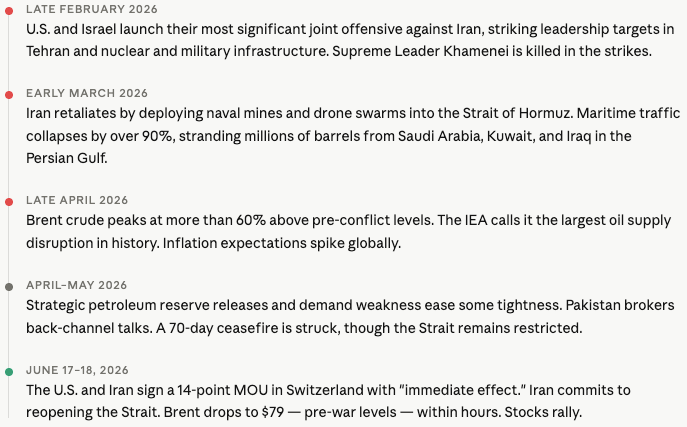
After four months of conflict that rattled energy markets, shuttered the world’s most critical oil chokepoint, and sent inflation surging, a 14-point memorandum of understanding (MOU) is officially on paper. Now comes the harder question: what does it actually change?

How we got here
What changed: we now have the actual text

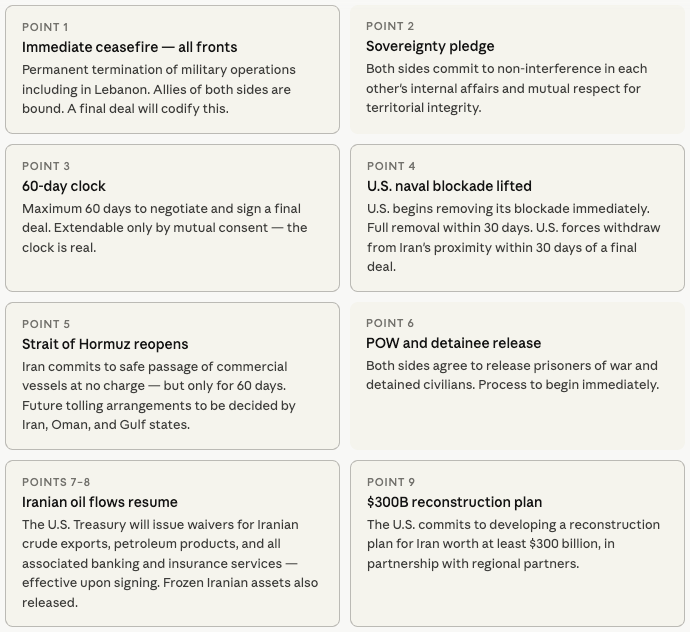
For days after President Trump announced the deal at the G7 in Evian, markets were trading on optimism without details. That changed Wednesday, when senior U.S. officials read the full 14-point text to reporters. Iran’s government subsequently published it on X, with both versions matching. Here’s what the MOU actually says — and what it means for your portfolio.

The 14 points, broken down
The line that defines the deal’s shelf life

“If it doesn’t get done in 60 days, that’s all right. We go back to bombing. I don’t want to do that, because it’s so good, but we might have to.”

— President Trump, G7 press conference, Evian, June 17, 2026

That quote is the single most important variable for market pricing right now. The 60-day window is both a countdown and a gun. Every week of productive nuclear talks should be modestly bullish for risk assets; any sign of breakdown is a swift, sharp risk-off trigger.

What the MOU means for markets — point by point

The most immediate market mover is Point 5 combined with Points 7 and 8. The Strait reopening plus the Treasury waivers on Iranian oil exports means meaningful supply is returning to the market essentially overnight. Brent has already fallen back to $79, erasing the entire conflict premium. With the IEA having called this the largest oil supply disruption in history, the reversal is equally historic in speed.

Point 9 — the $300 billion reconstruction commitment — is less discussed but potentially significant for construction, infrastructure, and industrial materials sectors. If talks succeed and a final deal unlocks that spending, it’s a meaningful demand signal for commodities like steel, cement, and copper, as well as for defense and engineering contractors with Middle East exposure.

The toll-free Strait access is notable for one key reason: it’s explicitly limited to 60 days. After that, future administration of the waterway falls to Iran, Oman, and Gulf states. U.S. officials claim Gulf states will never agree to tolls, but markets should price in some ongoing uncertainty premium around Hormuz access until a final deal settles this permanently.

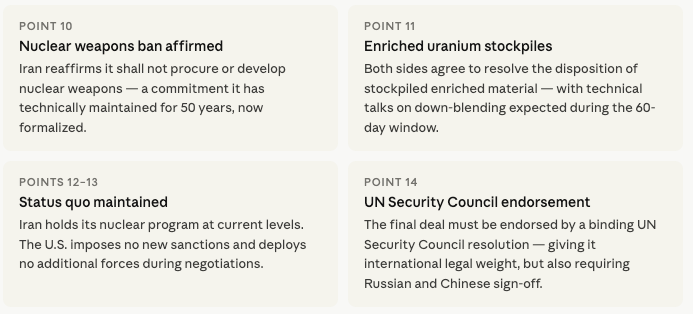
Point 14‘s UN Security Council requirement is the sleeper risk. Russia and China hold vetoes. If the final deal drifts in a direction either finds unfavorable, the endorsement pathway becomes complicated — and a deal without it may have less legal durability than markets assume.

The Fed angle — does this flip the dot plot?

Yesterday’s dot plot showed nine FOMC members favoring rate hikes, with the median projection jumping to 3.8% — driven explicitly by energy-driven inflation from the conflict. If oil holds near $79 and Iranian supply normalizes over the coming weeks, the inflation data will begin to reflect that, likely starting with July’s CPI release.

That doesn’t mean hikes are off the table — the Fed is watching core inflation too, and second-round energy effects can be sticky. But the directional pressure on the dot plot changes materially. A deal that holds could shift the median projection back toward hold, or even eventually toward cuts, well before the end of 2026.

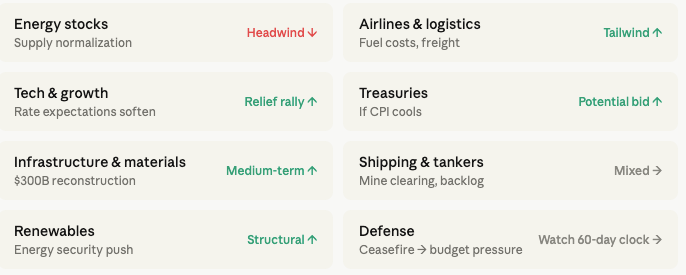
Sectors and assets to watch
Bottom line

The MOU is more substantive than many expected. Oil sanctions relief is immediate, the Strait reopens now, and Iran gets a credible path to sanctions removal and reconstruction funding. In exchange, the nuclear weapons commitment is reaffirmed and technical talks on enriched stockpiles begin.

The core risk hasn’t changed: this is an interim agreement with a hard expiration. The 60-day clock is ticking. A final deal requires resolving Iran’s nuclear program, U.S. sanctions, regional security arrangements, and UN endorsement — none of which are simple. But for now, the market has a genuine reason to reprice the conflict premium out. Whether that holds depends entirely on the Swiss negotiating table over the next two months.

Watch the July CPI print. Watch the nuclear talks timeline. And keep one eye on the 60-day expiry date: August 18.


Market analysis provided by The Macro Compass is for informational purposes only. Please consult with a financial advisor before making investment decisions.
G7 Summit 2026: Why Markets Are Paying Attention This Week

From tariffs and AI to Ukraine and the Iran peace framework, the G7 summit could shape markets far beyond this week.

The annual G7 summit rarely moves markets as dramatically as a Federal Reserve meeting or jobs report. Yet this year’s summit in Évian-les-Bains, France, may prove unusually consequential for investors.

With world leaders gathering amid geopolitical tensions, trade disputes, and rapid advances in artificial intelligence, the outcomes—or lack thereof—could influence everything from oil prices to semiconductor stocks.

What Is the G7?

The Group of Seven (G7) consists of the United States, Canada, France, Germany, Italy, Japan, and the United Kingdom, with the European Union participating as a non-enumerated member. The summit serves as a forum for major advanced economies to coordinate on economic and geopolitical issues. This year’s summit runs from June 15–17 in Évian, France.

Unlike central bank meetings that directly affect interest rates, the G7 primarily influences markets through policy coordination, diplomatic signals, and shifts in investor sentiment.

Key Market Themes to Watch

1. Iran and Energy Markets

Perhaps the biggest market catalyst is the recent U.S.-Iran framework agreement aimed at ending hostilities. G7 leaders are expected to discuss reopening the Strait of Hormuz and ensuring regional stability.

Potential market impact:

  • Bullish for equities: Reduced geopolitical risk generally supports risk assets.
  • Bearish for oil: Lower supply disruption risk could pressure crude prices.
  • Bullish for airlines and transport: Lower energy costs improve margins.
  • Bearish for defense stocks: Reduced conflict risk may diminish demand expectations.

For investors, oil may remain one of the most sensitive assets to summit headlines.

2. Trade Tensions and Tariffs

Trade remains a major source of friction within the G7. Discussions are expected to focus on tariffs, supply chains, and reducing dependence on China for critical minerals. However, disagreements persist between the United States and European allies over implementation.

Potential market impact:

  • Bullish for domestic mining and materials firms if Western supply chains receive support.
  • Mixed for industrials and manufacturers depending on tariff outcomes.
  • Potential volatility in semiconductor supply chains due to ongoing economic security concerns.

Investors should watch for any announcements regarding lithium, rare earths, nickel, and cobalt—materials essential to EVs and AI infrastructure.

3. Ukraine and Sanctions

Continued support for Ukraine remains a major agenda item. Additional sanctions against Russia and measures targeting its energy exports could emerge from the summit.

Potential market impact:

  • Higher volatility in energy markets.
  • Support for defense and aerospace companies.
  • Continued emphasis on energy security and nuclear investment.

Energy traders, in particular, will monitor whether sanctions affect global supply expectations.

4. Artificial Intelligence Takes Center Stage

This year’s summit features participation from leaders of major AI companies, highlighting how AI has become a core geopolitical and economic issue. Discussions are expected to focus on AI governance, safety, and international cooperation.

Potential market impact:

  • Positive for AI infrastructure companies.
  • Increased regulatory scrutiny for large AI platforms.
  • Continued demand for semiconductors, cloud computing, and data centers.

For investors, AI remains one of the strongest secular growth themes, but increased regulation could introduce headline risk.

What This Means for U.S. Markets

For U.S. equities, the summit’s overall impact likely depends on whether it produces:

  1. A reduction in geopolitical risk (bullish).
  2. Progress on trade cooperation (bullish).
  3. New sanctions or tariff escalation (bearish).
  4. Clarity on energy security (reduces volatility).

Given the recent rally in U.S. markets, investors may be particularly sensitive to any negative surprises. Conversely, further confirmation of the Iran agreement and stable energy supplies could support another leg higher for equities. Summit discussions are also expected to address broader economic imbalances involving China, Europe, and the U.S., which could shape long-term market narratives.

Bottom Line

The G7 summit rarely delivers immediate policy changes, but it often shapes the narratives that drive markets over the coming months.

This year’s summit arrives at a unique moment: geopolitical tensions are easing in some areas while trade disputes and AI competition are intensifying. For investors, the key question is whether world leaders can provide enough stability to sustain risk appetite—or whether new disagreements will inject fresh volatility into markets.

As always, markets care less about speeches and more about outcomes.


Market analysis provided by The Macro Compass is for informational purposes only. Please consult with a financial advisor before making investment decisions.
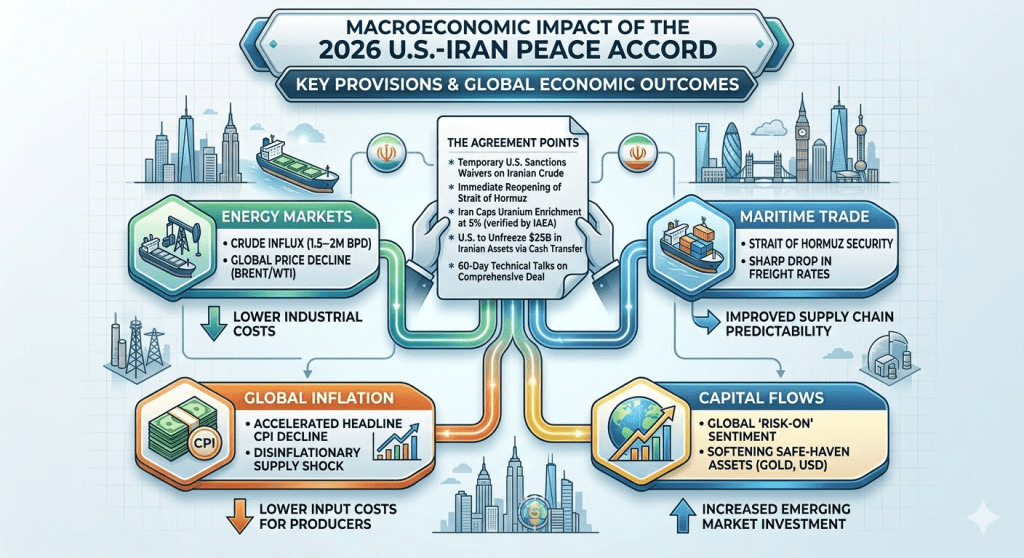
The 2026 U.S.-Iran Peace Accord: Macroeconomic Implications for Global Markets

On June 14, 2026, the United States and Iran finalized an interim peace agreement mediated by Pakistan, ending a volatile four-month regional conflict. While the primary relief is geopolitical, the economic ripple effects will fundamentally alter global supply chains, energy markets, and monetary policy trajectories.

For macroeconomic analysts, this accord represents a massive supply-side shock. Here is a breakdown of every core economic and structural catalyst outlined in the deal and their anticipated impact on global markets.

1. Complete Breakdown of the Accord’s Terms

The interim agreement, which serves as a binding memorandum of understanding, contains six non-negotiable pillars that take immediate effect ahead of the formal signing ceremony in Switzerland on Friday, June 19, 2026:

  • Immediate Ceasefire: Permanent termination of military operations on all fronts, including conflicts involving Hezbollah in Lebanon, stripping the structural “war premium” out of global commodity markets.
  • Reopening the Strait of Hormuz: Iran must immediately open the maritime corridor to all commercial vessels, eliminating severe logistics bottlenecks.
  • Lifting the Naval Blockade: U.S. President Donald Trump authorized the complete removal of the U.S. naval blockade on Iran, restoring normal shipping lane capacity.
  • Oil Sanctions Waivers: The U.S. will temporarily waive oil sanctions, legally allowing Iran to inject 1.5 to 2 million barrels per day (bpd) back into the global supply.
  • $25 Billion Cash Transfer: The U.S. will release $25 billion in frozen Iranian assets via direct cash transfers, drastically shifting regional liquidity.
  • Nuclear Freeze & Stockpile Negotiation: Iran must immediately pause uranium enrichment and facility expansion. A strict 60-day window of technical talks begins now to negotiate the permanent destruction or dilution of its highly enriched uranium stockpile.

2. Market Impact Analysis

Energy Sector: A Sudden Supply Influx

The immediate legal flow of Iranian crude will heavily disrupt a tightly balanced global energy market. Expect rapid downward pressure on Brent and WTI crude futures. A sustained oil price drop acts as an organic, cross-border tax cut for importing nations, boosting consumer disposable income and lowering industrial input costs.

Supply Chains: Reopening the Global Chokepoint

The Strait of Hormuz handles roughly 20% of the world’s petroleum. Opening it instantly eliminates hyper-inflated war-risk insurance premiums for maritime shipping. Freight rates for tankers and container ships in the Middle East will plummet, alleviating lingering global transit inflation and restoring predictability to European and Asian supply chains.

Inflation and Central Bank Trajectories

Prior to the accord, central banks were bracing for stagflationary pressures driven by energy spikes. This disinflationary impulse will accelerate the decline of headline Consumer Price Index (CPI) metrics globally. Lower structural inflation gives the Federal Reserve and the European Central Bank (ECB) room to halt rate hikes or pivot toward monetary easing, supporting global GDP growth.

Capital Flows and Asset Reallocation

The $25 billion liquidity injection combined with geopolitical de-escalation will trigger a strong “risk-on” environment. Capital is expected to exit traditional safe havens like Gold and the U.S. Dollar, rotating back into emerging markets and global equities.

The Bottom Line

The 2026 U.S.-Iran Peace Accord is a net-positive supply shock for the global economy. By lowering energy costs, restoring vital trade corridors, and mitigating geopolitical risk premiums, the agreement provides a stabilizing anchor for global growth. However, long-term market stability hinges entirely on compliance during the next 60 days of technical nuclear talks.


Market analysis provided by The Macro Compass is for informational purposes only. Please consult with a financial advisor before making investment decisions.
The Great Uncoupling: What the UAE’s OPEC Exit Means for Your Energy Future

The global oil landscape shifted on May 1, 2026, as the United Arab Emirates officially ended its 59-year membership in OPEC. This “shock” move, coming in the middle of a major regional energy crisis, effectively transforms the UAE into an oil “free agent”.

Why the UAE Walked Away

The decision follows years of internal tension between Abu Dhabi and the Saudi-led cartel over production limits.

  • Production Handcuffs: The UAE has spent $150 billion to expand its oil capacity to nearly 5 million barrels per day (bpd). Under OPEC, it was restricted to roughly 3.5 million bpd, leaving billions in potential revenue on the table.
  • National Interest First: UAE Energy Minister Suhail al-Mazrouei clarified this was a strategic policy shift to maximize domestic wealth and fund the nation’s transition into non-oil sectors like AI and green energy.
  • Regional Discord: Tensions with Saudi Arabia over regional leadership and the ongoing conflict in the Gulf made the strictures of the alliance increasingly untenable for Emirati leadership.

Impact on Global Supplies

While the UAE is now free to pump at will, the physical supply of oil hasn’t changed overnight.

  • The Hormuz Bottleneck: The ongoing blockade of the Strait of Hormuz means that much of the UAE’s oil remains physically stranded. Until maritime traffic fully resumes, the country cannot yet flood the market with its extra capacity.
  • Future Surge: Experts at BBC News suggest that once logistical hurdles clear, the UAE could increase global production by one million barrels per day almost immediately.

What This Means for Oil Prices

The departure of OPEC’s third-largest producer has created two distinct market phases:

  1. Short-Term Volatility: Markets initially dipped on “supply-glut” fears before rebounding to over $112 Brent and $105 WTI due to the high “war premium” currently priced into every barrel.
  2. Long-Term Bearish Outlook: Analysts at CNN Business and Yahoo Finance note that by stripping OPEC of its primary source of spare capacity, the cartel’s ability to “floor” prices is permanently weakened. This could lead to significantly lower prices once regional stability returns.

The Market in General: Winners and Losers

The exit is a blow to the cartel’s cohesion but a potential boon for Western markets.

  • U.S. Relations: Experts believe the U.S. government welcomes the move as it curbs the cartel’s overall pricing power.
  • Stock Market Shift: According to MarketWatch, the move creates clear winners in U.S. energy stocks, while industries like airlines and logistics may face continued margin pressure until regional shipping stabilizes.

Market analysis provided by The Macro Compass is for informational purposes only. Please consult with a financial advisor before making investment decisions.
Operation “Project Freedom”: Naval Escorts in the Strait of Hormuz

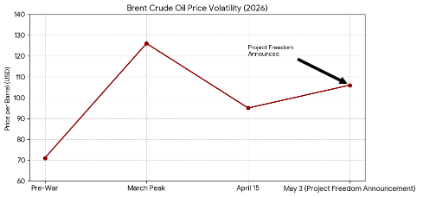
The global energy market is currently at a high-stakes crossroads. On May 4, 2026, the U.S. will officially launch Project Freedom, a major initiative to provide military escorts for commercial vessels through the Strait of Hormuz. This move, announced by President Donald Trump, aims to break a weeks-long maritime gridlock that has paralyzed one of the world’s most critical energy chokepoints.

The Current Crisis in the Strait

The Strait of Hormuz, a narrow waterway south of Iran, typically handles roughly 20% of the world’s oil and liquefied natural gas (LNG). Since the outbreak of conflict in February 2026, passage has become a high-risk gamble:

  • Widespread Blockades: Iranian-laid sea mines and threats of drone or missile strikes have effectively closed the channel to most neutral commercial traffic.
  • Stranded Cargo: Approximately 230 oil tankers and numerous LNG carriers are currently idle in the Persian Gulf, unable to deliver their vital loads to global markets.
  • Insurance Shocks: Tanker insurance rates skyrocketed to over 10 times their normal levels, making passage economically unfeasible for most shipping lines.

How Escorts Affect Oil Prices

Markets have historically reacted sharply to news regarding the Strait, and Project Freedom is already shifting the narrative.

  • Stabilizing the Supply: By guiding stranded tankers out of the Gulf, the U.S. Navy aims to inject millions of barrels of crude back into the global supply chain. Initial reactions saw Brent crude dip toward $106 per barrel following the announcement, down from peaks of over $120.
  • Lowering Risk Premiums: The U.S. is also offering affordable political risk insurance through the Development Finance Corporation to encourage shipping lines to resume transits.
  • Inflationary Pressures: Despite the escorts, prices remain roughly 50% above pre-conflict levels. Experts at U.S. News & World Report note that every $10 increase in crude can raise American gas prices by 25 cents, contributing to wider inflationary concerns.

Broader Market Impacts

The ripples of the Hormuz crisis extend far beyond the fuel pump:

  • Shipping & Logistics: The backlog of ships has caused extreme spikes in overall shipping costs, affecting the price of global goods.
  • Agriculture: Disruption to fertilizer production—specifically nitrogen and phosphorus—threatens global food security, as rising costs may lead farmers to reduce usage.
  • Asian Markets: Countries like China, India, Japan, and South Korea are the most vulnerable, as they historically receive over 80% of the oil transiting the Strait.

While the U.S. Navy‘s presence provides a tactical solution, the long-term health of the market depends on whether this move leads to a broader de-escalation or a further hardening of regional conflict.


Market analysis provided by The Macro Compass is for informational purposes only. Please consult with a financial advisor before making investment decisions.
The 100% Milestone: Navigating the Era of Triple-Digit Debt

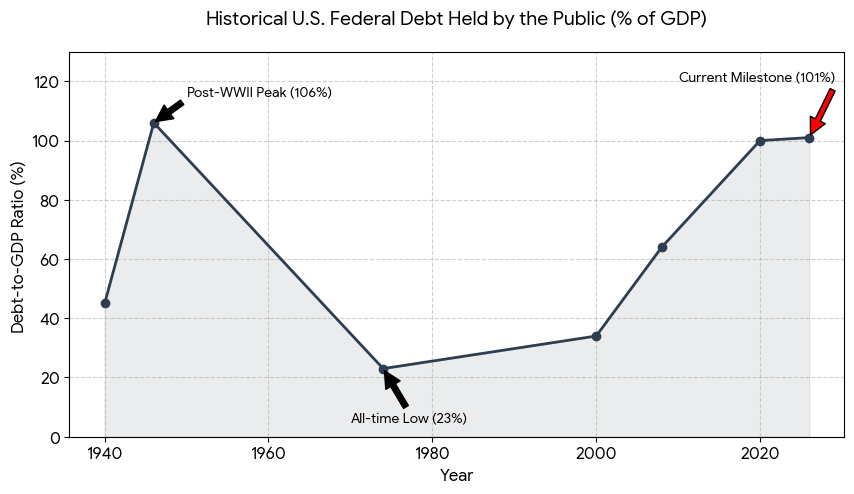
In March 2026, the United States crossed a psychological and economic Rubicon: the national debt officially exceeded 100% of the country’s Gross Domestic Product (GDP). While $31 trillion is a number so large it loses meaning, the 1:1 ratio is impossible to ignore. It means that for every dollar of value Americans produce in a year, the federal government owes a dollar to creditors.

This isn’t just a ledger entry; it’s a fundamental shift in the American economic story.

Why the 100% Ratio Matters

The debt-to-GDP ratio is often called the “credit score” of a nation. At 100%, the U.S. has entered a “danger zone” that economists have debated for decades.

  • The Tipping Point: Research from institutions like the Mercatus Center suggests that for advanced economies, debt becomes a “drag” on growth once it crosses roughly 75-80%. Every percentage point above this threshold is estimated to shave approximately 3.3 basis points off annual economic growth.
  • Fiscal Space: When a government is already maxed out, its “fiscal space”—the ability to borrow and spend during emergencies like pandemics or recessions—is severely limited.
  • The Interest Trap: As of 2026, interest payments on the debt have ballooned to over $1 trillion annually. For the first time in modern history, we are spending nearly as much on interest as we do on national defense.

Historical Context: From WWII to Today

The only other time the U.S. debt-to-GDP ratio reached these heights was in 1946, immediately following World War II, when it peaked at 106%. However, the “Great Drawdown” of the 1950s was driven by a post-war manufacturing boom and a younger population.

Today’s climb is structural, not temporary. It is driven by an aging population, rising healthcare costs, and a persistent gap where spending averages 21% of GDP while revenue stays at 18%.

How This Affects the Markets

Investors should prepare for a “new normal” where fiscal health dictates market volatility.

  1. “Crowding Out” Effect: When the government borrows trillions, it competes with the private sector for capital. This “crowding out” can lead to higher long-term interest rates, making it more expensive for businesses to expand and for consumers to get mortgages.
  2. Bond Market Jitters: We are seeing increased sensitivity in the Treasury market. If investors begin to doubt the U.S. government’s ability to service this debt without resorting to inflation (printing money), they will demand higher yields, leading to further price drops in existing bonds.
  3. The Growth Ceiling: High debt levels correlate with slower GDP growth. For equity markets, this could mean a lower “ceiling” for corporate earnings over the next decade.

The Bottom Line

Crossing 100% isn’t a guaranteed collapse—countries like Japan have operated at over 200% for years due to strong institutional trust. However, for the U.S., it marks the end of “consequence-free” borrowing.

As the Congressional Budget Office projects the ratio to hit 120% by 2036, the conversation must shift from “if” we should address the deficit to “how” drastically we must rebalance.


Market analysis provided by The Macro Compass is for informational purposes only. Please consult with a financial advisor before making investment decisions.
The UAE’s OPEC Exit: A High-Stakes Break for Strategic Autonomy

On April 28, 2026, the United Arab Emirates (UAE) delivered a historic blow to the global energy landscape by announcing its withdrawal from both OPEC and the wider OPEC+ alliance, effective May 1, 2026. This decision marks the end of a nearly 60-year membership and signals a fundamental shift in how one of the world’s most influential oil producers intends to manage its resources.

The move comes amid intense regional instability, including the ongoing U.S.-Israel war with Iran, which has severely restricted oil exports through the Strait of Hormuz.

Why the UAE is Leaving Now

The UAE Energy Ministry characterized the exit as a strategic “evolution” of its sector policies to enhance flexibility. Key drivers include:

  • Production Freedom: As OPEC’s third-largest producer, the UAE has long felt constrained by production quotas. By leaving, it can now move toward its goal of increasing production capacity to 5 million barrels per day (bpd) by 2027—and potentially up to 6 million bpd—without external limits.
  • National Interest Over Collective Restraint: Officials stated the need to prioritize national strategic and economic visions. This includes maximizing the value of its oil reserves before global demand potentially peaks in the coming decade.
  • Geopolitical Friction: The decision reflects a growing rift with Saudi Arabia, OPEC’s de facto leader, and frustration with fellow Arab states regarding regional security responses during the recent Middle East conflict.

The Impact on Global Markets

While the immediate reaction in oil markets has been somewhat muted due to existing supply constraints in the Strait of Hormuz, the long-term implications are profound.

  • Weakened Cartel Influence: The departure removes roughly 13–15% of OPEC’s production capacity, significantly diminishing the group’s ability to calibrate global supply and stabilize prices.
  • Potential for Lower Prices: In the long term, once export routes normalize, the UAE’s ability to pump oil “unconstrained” could put downward pressure on global crude prices.
  • Opportunities for U.S. Partners: Analysts at Yahoo Finance and The Motley Fool suggest that U.S. companies like ExxonMobil and Occidental Petroleum, which have significant joint ventures with the UAE’s national oil company (ADNOC), may benefit from increased production opportunities.

The End of an Era?

The UAE follows other recent departures, such as Qatar (2019) and Angola (2024), leading some experts to call this “the beginning of the end” for OPEC’s decades-long dominance. By prioritizing sovereign flexibility and strategic autonomy, the UAE is redrawing the global oil power lines for a more competitive—and potentially more volatile—energy future.


Market analysis provided by The Macro Compass is for informational purposes only. Geopolitical events are highly volatile; please consult with a financial advisor before making investment decisions based on conflict-related data.

Diplomatic Deadlock: How Trump’s Scrapped Pakistan Talks Could Shake the Markets Next Week

The high-stakes diplomatic gamble in Islamabad has hit a wall. On Saturday, President Trump abruptly canceled the peace talks between U.S. and Iranian officials in Pakistan, citing “tremendous infighting and confusion” within the Iranian leadership.

While the President insists this isn’t an immediate return to war, the global markets—which hate nothing more than uncertainty—are bracing for a turbulent Monday morning. Here is what investors and analysts are watching as we head into the new trading week.

1. Energy Markets: The Squeeze Continues

The most immediate impact will be felt at the pump and on the energy exchanges. With the Strait of Hormuz remaining closed and a second U.S. aircraft carrier joining the naval blockade, the failed breakthrough in Pakistan leaves no clear exit ramp for the current supply crisis. Crude oil prices, already under immense pressure, are expected to remain elevated or spike further as the “diplomatic premium” fades.

2. A “Risk-Off” Monday?

Early indicators suggest a bumpy ride for equities. The Invesco QQQ Trust (QQQ) showed downward movement in after-hours trading immediately following the announcement. As the hope for a “permanent deal” cools, we expect a classic “risk-off” rotation:

  • Safe Havens: Look for potential movement toward gold, Treasuries, and the U.S. dollar as investors seek shelter from geopolitical volatility.
  • Tech and Growth: These sectors may face headwinds if inflationary fears regarding energy costs continue to rise.

3. The Inflation Shadow

Perhaps the most concerning takeaway for the broader economy is the threat of “hyperinflation.” Analysts warn that the longer these critical trade routes remain blocked and diplomatic channels stay silent, the more likely we are to see a sustained rise in the cost of goods globally.

The Bottom Line

The departure of Iranian Foreign Minister Abbas Araghchi from Islamabad without a deal has effectively hit the “pause” button on regional stability. While the U.S. administration maintains a posture of high-readiness rather than active conflict, the market’s reaction will likely be one of caution.

Expect volatility to be the theme of the week. Investors should keep a close eye on real-time energy updates and any further messaging from the White House regarding the status of the naval blockade.


Market analysis provided by The Macro Compass is for informational purposes only. Geopolitical events are highly volatile; please consult with a financial advisor before making investment decisions based on conflict-related data.

“Economic Terrorism”: Energy Titans Warn of a Long-Term Crisis at the Strait of Hormuz

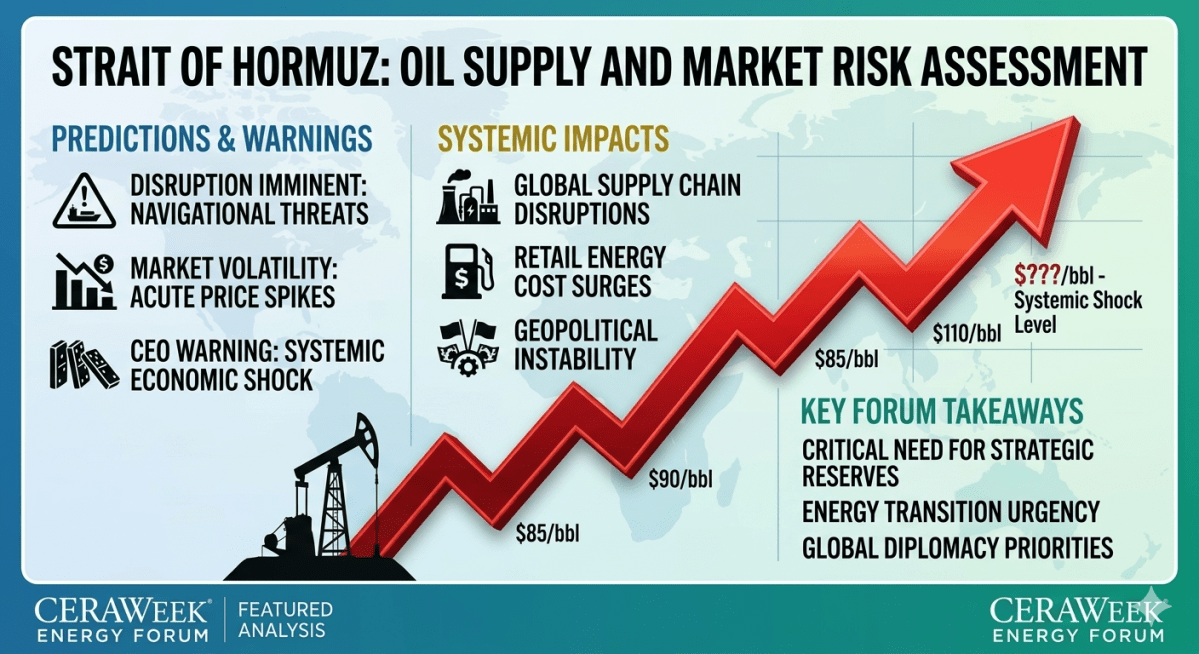
Energy executives at CERAWeek warned that the global economy is underestimating the blockade at the Strait of Hormuz, leading to a severe supply crisis. With 20% of global oil stranded and systemic inflation rising, the impact on prices for consumers will be significant. The situation is expected to disrupt the economy for months.

The world’s most powerful energy executives gathered this week at the CERAWeek conference in Houston, and their message was blunt: the global economy is drastically underestimating the severity of the blockade at the Strait of Hormuz. What started as a regional military standoff has evolved into what ADNOC CEO Sultan Al Jaber calls “economic terrorism against every nation.”

As “Operation Epic Fury” enters its second month, here is the reality check from the men and women who run the world’s oil and gas supply.

The “Nightmare Scenario” for Supply

For weeks, the market hoped for a quick resolution. The CEOs have officially ended that optimism. Chevron CEO Mike Wirth warned that investors are trading on “scant information” and have not yet felt the “physical manifestations” of the closure.

The logistical math is grim:

  • Stranded Assets: Roughly 20% of global oil and 25% of liquefied natural gas (LNG) are currently trapped behind the blockade.
  • The “Help!” Calls: Cheniere Energy CEO Jack Fusco revealed he is receiving desperate calls from Asian buyers as the final pre-war shipments of Qatari gas make landfall. Once those are gone, the “dry spell” begins.
  • Infrastructure Damage: Saudi Aramco’s Amin Nasser confirmed that missile and drone attacks have caused “catastrophic” damage to regional infrastructure, meaning supply won’t just “flicker back on” even if the Strait opens tomorrow.

The Inflationary Tsunami: What This Means for Your Wallet

The primary concern for consumers is no longer just the price of a gallon of gas; it’s the systemic inflation triggered by a $112+ barrel of oil.

  1. “Cost-Push” Inflation: When energy costs spike, the cost of manufacturing and transporting everything follows. We are seeing a “cascading effect” where prices for groceries, plastics, and electronics are adjusted upward weekly to account for surging freight and power costs.
  2. The Fertilizer Crisis: Shell CEO Wael Sawan noted that the shock is moving West. Because the Middle East is a hub for fertilizer production, the blockade is driving up farming costs globally, guaranteeing double-digit food inflation through the next harvest cycle.
  3. The Fed’s Corner: With energy-driven inflation soaring, the Federal Reserve faces a “Stagflation” trap—forced to keep interest rates high to battle rising prices even as the military conflict threatens to slow down global economic growth.

Market Reaction: A “Risk-Off” Reality

The CEOs’ warnings have sent a chill through Wall Street. ExxonMobil CEO Darren Woods noted that the company has already evacuated non-essential staff from the region, a move mirrored by many multinationals.

Investors are pivoting away from high-growth tech stocks and toward “defensive” plays:

  • Winners: Large-cap Energy (XLE) and Defense contractors remain the only green spots on the board.
  • Losers: Airlines and Retailers are being hammered by the dual threat of high fuel surcharges and cooling consumer demand.

The Bottom Line: The “Leverage” strategy of deploying 10,000 more troops is being watched closely, but the energy industry is already bracing for a multi-month disruption. As Kuwait Petroleum’s CEO put it, the global economy is currently being “held hostage,” and the ransom is being paid by every consumer at the checkout counter.


Market analysis provided by The Macro Compass is for informational purposes only. Geopolitical events are highly volatile; please consult with a financial advisor before making investment decisions based on conflict-related data.

The Global Chokepoint: Why the Closure of the Strait of Hormuz Matters to Your Wallet

The world’s most important maritime artery has been constricted, and the pulse is being felt in every corner of the global economy. As the Strait of Hormuz remains effectively closed to a significant portion of global trade this March 2026, we are no longer just looking at a regional conflict—we are looking at a systemic shock to the cost of living.

Here is how the closure of this 21-mile-wide passage is rippling through the economy and, more importantly, your bank account.

The Energy Shock: Beyond the Gas Pump

The Strait is the transit point for roughly 25% of the world’s liquid natural gas (LNG) and 20% of its oil. With these supplies stranded, Brent crude has surged past $112 a barrel.

  • The Inflation Direct Hit: Rising fuel costs are the “tax” that everyone pays. High energy prices increase the cost of producing and transporting nearly every physical good on earth.

The Kitchen Table: Food and Fertilizer

This is the hidden crisis. The Middle East is a titan in the fertilizer market, responsible for one-third of the world’s seaborne trade in urea and ammonia.

  • The Inflation Ripple: With fertilizers stuck behind the blockade, prices have jumped 38%. This isn’t just a problem for farmers; it’s a guaranteed price hike for wheat, fruits, and vegetables (already up 5.2%) in the coming months. When it costs more to grow food, it costs more to buy it.

Manufacturing and Tech: The Helium & Plastic Crisis

It’s not just oil. The region is a massive exporter of petrochemicals (the building blocks of plastic) and helium.

  • The Industry Strain: If you’re looking for a new car, a laptop, or even medical services like an MRI, costs are climbing. Helium is essential for semiconductor cooling and medical magnets. The scarcity of these raw materials is forcing manufacturers to raise MSRPs to protect their margins.

Logistics: The Long Way Around

Shipping companies are now rerouting vessels around the Cape of Good Hope. This adds 15 to 20 days to transit times and sends insurance premiums through the roof.

  • The Consumer Delay: “Just-in-time” supply chains are breaking down. Expect longer wait times for imported goods and “surcharges” on shipping and airfare as airlines struggle with the massive spike in jet fuel costs.

The Bottom Line: A Stagflationary Threat

The primary concern for the week ahead is Stagflation—a toxic mix of stagnant economic growth and high inflation. As the “cost of everything” rises due to these supply chain breaks, the Federal Reserve faces a nightmare scenario: they may be forced to keep interest rates high to fight inflation, even as the economy begins to slow down under the weight of the conflict.

The closure of the Strait isn’t just a headline about distant tankers; it’s a direct pressure cook on global inflation that will likely define the economic landscape for the rest of the year.

Will the Iran War Trigger a Petrodollar Exodus from U.S. Markets?

The recent escalation of the Iran conflict has raised a pressing question for investors: could Gulf oil-exporting nations pull their trillions of petrodollars out of U.S. markets? While the headlines may suggest a potential exodus, the reality is far more nuanced.


🛢️ What Are Petrodollars?

When countries like Saudi Arabia, the UAE, and Qatar sell oil, they are paid in U.S. dollars. These dollars are then reinvested globally through:

  • U.S. Treasury bonds
  • Equities
  • Real estate and private equity

This reinvestment process, called petrodollar recycling, has been a cornerstone of global finance for decades.


⚠️ Why Investors Are Watching Now

The Iran war has created geopolitical uncertainty in the Gulf, prompting some sovereign funds to review their global investment strategies. Funds such as:

  • Saudi Arabia Public Investment Fund (~$1.1T)
  • Abu Dhabi Investment Authority (~$1.1T)
  • Kuwait Investment Authority (~$1T)
  • Qatar Investment Authority (~$500B)

control trillions of dollars in assets—enough that even a small reallocation could move global markets.


💵 But There’s No Exodus… Yet

Despite heightened tensions:

  • There has been no major withdrawal from U.S. markets.
  • Gulf financial hubs like Dubai and Doha continue normal investment activity.
  • The U.S. dollar has actually strengthened, as investors flock to safe-haven assets.

Ironically, the uncertainty caused by the war often increases demand for U.S. assets, rather than decreasing it.


🔑 Why Gulf Funds Still Rely on U.S. Markets

Even with the conflict, the U.S. remains a preferred destination for petrodollars because:

  1. Liquidity: Few markets can absorb hundreds of billions of dollars.
  2. Tech and venture capital: Many high-return opportunities are U.S.-based.
  3. Dollar-denominated oil trade: Accumulated dollars must be reinvested somewhere.

⚡ When Could a Real Exit Happen?

A major petrodollar withdrawal is unlikely without significant geopolitical shifts, such as:

  • A collapse of Gulf-U.S. security alliances
  • A shift of oil trade to currencies like the Chinese yuan
  • Targeted sanctions or restrictions on Gulf assets

Until then, any movement is likely to be gradual diversification, not a sudden pullout.


🌍 The Real Trend: Diversification, Not Abandonment

Gulf sovereign funds are increasingly diversifying into:

  • China and India
  • Southeast Asia
  • Europe
  • Domestic megaprojects

This reduces dependence on U.S. markets while keeping the bulk of their petrodollars invested in safe, liquid assets.


✅ Bottom Line

The Iran war raises legitimate concerns about global capital flows. But historically and currently, there is no large-scale petrodollar exit from the U.S. In fact, uncertainty often drives more money into U.S. assets, not away.

For investors, the takeaway is clear: watch for gradual diversification trends, but don’t expect an immediate flood out of U.S. markets.

How Iran’s Attacks in the Strait of Hormuz and Record Oil Reserve Releases Are Shaking Global Markets

The past week has delivered some of the most dramatic swings in energy and financial markets in years. As Iran ramps up attacks on commercial vessels in the Strait of Hormuz—a waterway that normally handles about 20% of global oil shipments—oil markets have rocketed, some producers have cut output, and governments have responded with unprecedented intervention.


🛢️ Oil Markets: Prices Up, Volatility Up

Despite a historic intervention by the International Energy Agency (IEA) to release 400 million barrels from global strategic reserves—the largest such release in history—oil prices have remained elevated and volatile. Crude benchmarks like Brent have traded above $90–$100 per barrel as supply fears persist.

This demonstrates two key points:

  1. Reserve releases temper extreme price spikes, but they cannot fully offset sudden disruptions.
  2. Markets are pricing in a significant risk premium because the Strait of Hormuz remains threatened and regional energy infrastructure is under attack.

⚓ The Strait of Hormuz: A Choke Point With Global Reach

The Strait of Hormuz is a critical artery for global oil. Any disruption affects not only Iranian exports but also supplies from Saudi Arabia, Iraq, Kuwait, and the UAE. Even temporary interruptions trigger rapid price swings as traders hedge for worst-case scenarios.


📉 Broader Market Impact

  1. Stock markets have wobbled — global equity indexes dipped as oil prices surged and inflation fears grew. Energy costs affect transportation, manufacturing, airlines, and logistics.
  2. Supply chains beyond energy are strained — freight disruptions and rising shipping costs ripple through global commodity flows.
  3. Safe-haven assets are in demand — investors rotate into bonds, gold, and other low-risk assets during periods of uncertainty.

💹 Inflationary Pressure Forecast

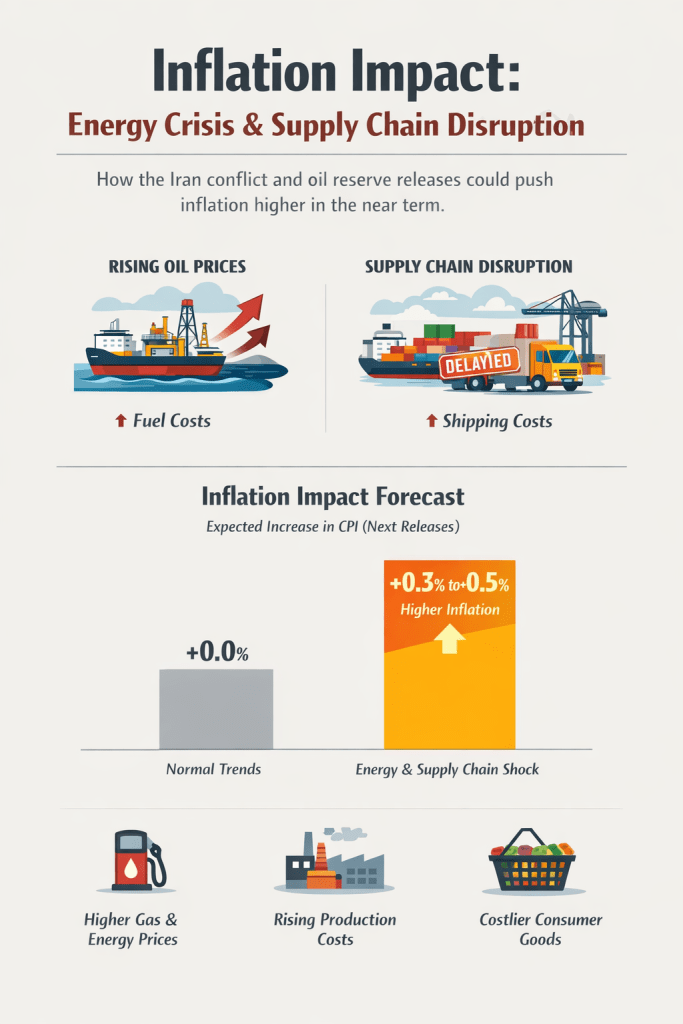
The combination of elevated oil prices and disrupted shipping routes is expected to push inflation higher in the near term. Key points:

  • Transportation costs rise as shipping becomes riskier and fuel prices climb.
  • Goods production costs increase because petroleum-based inputs for manufacturing and chemicals become more expensive.
  • Consumer prices for energy and essential goods are likely to increase in the coming months, adding pressure on headline inflation.

Analysts forecast that inflation readings could be 0.3–0.5% higher than baseline expectations in the next CPI releases, primarily driven by energy and transportation costs. Central banks may respond cautiously, weighing both the temporary nature of the shock and the risk of broader economic slowing.


🧠 What the IEA Release Really Means

The coordinated release of 400 million barrels is extraordinary:

  • Provides near-term supply relief
  • Signals global policymakers are taking the energy shock seriously
  • Demonstrates international cooperation in a global energy crisis

However, markets see it as a stabilizing buffer, not a permanent solution. If attacks in the Strait of Hormuz continue, oil supply shocks and inflationary pressures are likely to persist.


📊 In Summary

With Iran attacking ships in the Strait of Hormuz and a record oil reserve release underway, markets are reacting on multiple fronts:

  • Oil prices remain elevated and volatile.
  • Equity markets are cautious due to inflation and growth concerns.
  • Supply chain costs beyond energy are climbing.
  • Inflationary pressure is expected to rise in the near term.

Even with strategic reserve releases, the uncertainty surrounding shipping lanes and regional energy security will keep markets headline-driven in the coming weeks.


Iran War: Impact on Oil Production, Prices, and the Global Supply Chain

The ongoing conflict involving Iran has quickly become one of the most significant shocks to global energy markets in recent years. Because the Middle East sits at the center of global oil production and transportation, disruptions in the region can ripple through the entire energy ecosystem—from crude production to transportation networks and global supply chains.

Impact on Oil Production

Iran is a meaningful oil producer. Under normal conditions, the country produces roughly 3.2 million barrels of oil per day, exporting about 1.4 million barrels daily to global markets.

However, the broader risk extends far beyond Iran’s own output. Military strikes, infrastructure damage, and regional instability have the potential to affect oil facilities across multiple Gulf producers and disrupt logistics throughout the region. In total, disruptions in the region could threaten up to one-fifth of global oil supply, making the conflict a major global energy event rather than a localized issue.

Oil production can also fall indirectly during conflicts because:

  • Workers evacuate or halt operations
  • Facilities are damaged or temporarily shut down
  • Export terminals become inaccessible
  • Tanker shipping becomes unsafe

Even temporary shutdowns can tighten global supply significantly.

Disruption of Shipping Routes

One of the biggest risks comes from the Strait of Hormuz, a narrow shipping channel between Iran and Oman that handles roughly 20% of the world’s oil shipments.

During periods of conflict, shipping activity in the strait often slows as tanker operators avoid the area due to security risks. When shipping routes become unstable:

  • Oil exports slow or stop
  • Tankers remain anchored offshore
  • Storage facilities fill up
  • Global energy supply chains tighten

Because so much oil passes through this chokepoint, even the threat of disruption can cause markets to react immediately.

Impact on Oil Prices

Energy markets typically see sharp volatility during geopolitical conflicts in the Middle East. Prices often rise quickly as traders price in potential supply shortages and geopolitical risk.

Several factors push prices higher during conflicts:

  • Reduced production capacity
  • Shipping disruptions
  • Increased insurance and transport costs
  • A geopolitical “risk premium” added by traders

Even if physical supply remains mostly intact, markets often bid prices higher simply due to uncertainty.

Effects on the Global Supply Chain

Higher oil prices and disrupted shipping routes can have far-reaching consequences beyond the energy sector. Oil is a fundamental input into transportation, manufacturing, and logistics worldwide.

When oil prices rise or supply becomes unstable, supply chains may experience:

Higher transportation costs
Trucking, rail, shipping, and air freight all rely heavily on fuel. Rising fuel prices increase the cost of moving goods globally.

Manufacturing cost pressures
Many industrial materials and chemicals depend on petroleum-based inputs, which can increase production costs.

Shipping delays and bottlenecks
If tanker traffic slows through key routes like the Strait of Hormuz, it can delay deliveries and tighten global inventories.

Food and consumer price pressure
Higher transportation and fertilizer costs can eventually flow through to food and consumer goods prices.

Broader Economic Implications

Energy price shocks have historically rippled through the broader economy. Rising oil prices can increase business operating costs, reduce consumer purchasing power, and contribute to inflation.

For consumers, the most visible effects are often:

  • Higher gasoline prices
  • More expensive shipping and transportation
  • Rising costs for everyday goods

The Bottom Line

The Iran conflict is impacting the global energy system through multiple channels at once: potential disruptions to production, threats to key shipping routes, and heightened geopolitical risk.

Together, these factors are increasing volatility in energy markets and putting pressure on global supply chains. Even if the conflict stabilizes in the near term, the ripple effects could continue influencing energy markets and global trade for months.

Market Watch: Iran’s Leadership Shift and Ongoing Conflict Stir Volatility

Recent developments in the Middle East are keeping global markets on edge. Iran has appointed Mojtaba Khamenei, the son of the late Supreme Leader Ali Khamenei, as its new Supreme Leader, while military tensions in the region continue. These twin events—leadership succession and ongoing conflict—are injecting heightened uncertainty into financial markets worldwide.

A Hardline Leader in a Volatile Time

Mojtaba Khamenei’s rise is controversial. While state media highlight strong support, domestic sentiment appears deeply divided. Many observers caution that the new leadership is inexperienced and unlikely to pursue compromise, signaling that the current regional instability may persist. International reactions have been critical, adding layers of geopolitical tension.

How Markets Are Reacting

Markets generally dislike uncertainty, and geopolitical conflicts are no exception. The combination of ongoing military action and a potentially hardline Iranian leadership is creating a risk-off environment. Investors are moving cautiously, seeking safe havens such as bonds, gold, and other traditionally lower-risk assets.

Energy and defense sectors are seeing relative interest as investors anticipate potential disruptions in the Middle East. At the same time, volatility indices are elevated, reflecting broader concerns about global economic stability.

Key Factors to Watch

  • Conflict Escalation: Any expansion of the war or involvement of additional countries could heighten market stress.
  • Energy Prices: Spikes in oil or gas prices can feed inflation and slow growth, affecting investor sentiment.
  • Supply Chain Stability: Disruptions in global trade due to conflict can ripple through multiple industries.
  • Investor Psychology: Markets often price in worst-case scenarios early; sentiment can swing quickly if news suggests de-escalation.

Bottom Line

While markets may experience bouts of volatility in the near term, much depends on how the conflict evolves and whether diplomatic solutions emerge. Investors are watching closely, balancing risk against broader economic fundamentals. In times like these, uncertainty reigns—but so too does opportunity for those keeping a careful eye on global developments.


How Geopolitical News Moves Financial Markets: Lessons from the Iran War Headlines

Financial markets often react instantly to geopolitical developments. When conflicts escalate—or when there are signals that tensions may ease—investors rapidly reassess risk, energy supply, and economic outlook.

A clear example occurred today after comments from Donald Trump suggesting the war involving Iran could be nearing its conclusion. The remarks triggered sharp movements across stocks, oil markets, and other assets, illustrating how sensitive global markets are to geopolitical news.

A Sudden Market Reversal

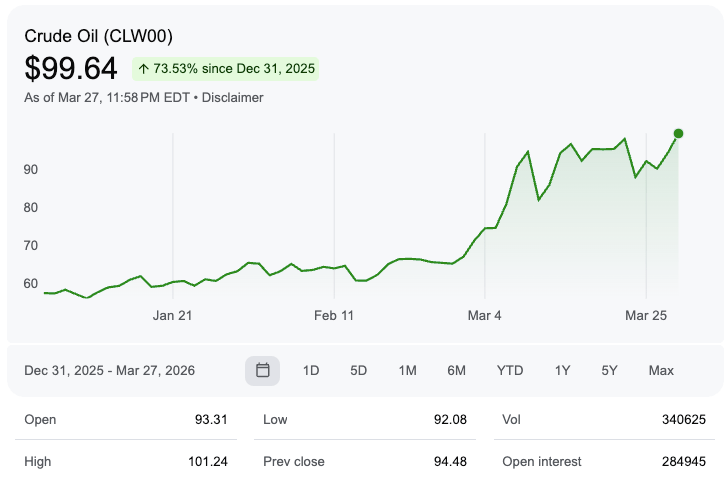
Earlier in the day, markets were under pressure due to rising energy prices and fears of prolonged conflict. Oil had surged above $100 per barrel amid concerns that fighting in the region could disrupt supplies moving through key shipping routes.

However, sentiment shifted dramatically after Trump indicated that the conflict was “very far ahead of schedule” and could soon be completed. Investors quickly interpreted the comments as a sign that the war might end sooner than expected. (uk.finance.yahoo.com)

As a result:

  • Major U.S. stock indexes reversed earlier losses and moved higher.
  • Oil prices fell sharply after earlier spikes.
  • Risk appetite returned across financial markets.

The late-day rally highlighted how quickly markets can change direction when new information alters investors’ expectations.

Why War and Peace Affect Markets

Geopolitical conflicts influence markets through several key channels.

Energy Supply and Oil Prices

The Middle East plays a critical role in global energy supply. Much of the world’s oil flows through the Strait of Hormuz, a narrow but vital shipping route. When tensions rise in the region, investors fear that oil shipments could be disrupted.

Those fears drove oil prices sharply higher earlier during the Iran conflict. When the possibility of de-escalation emerged, crude prices quickly dropped as the perceived supply risk eased. (Forbes)

Lower energy prices can also support the broader economy by reducing inflation pressures and lowering costs for businesses and consumers.

Investor Risk Sentiment

Wars tend to push investors toward safer assets such as commodities, government bonds, and defensive sectors. The possibility of peace, on the other hand, often encourages investors to move capital back into equities and growth-oriented investments.

That shift in sentiment was visible in the rapid rebound of the S&P 500 and exchange-traded funds such as the SPDR S&P 500 ETF Trust following Trump’s remarks.

Late-Day Volatility

Large moves related to news often occur late in the trading session. Several factors can amplify these reactions:

  • Short sellers closing positions after sudden positive news
  • Institutional investors adjusting portfolios before the market close
  • Options-related hedging activity that accelerates price movements

These forces can create rapid spikes or reversals during the final hour of trading.

The Bigger Picture

Markets are forward-looking. Investors constantly evaluate how new information could change the trajectory of economic growth, energy prices, and geopolitical stability.

While a statement suggesting the end of a war can spark an immediate rally, markets ultimately respond to confirmed developments rather than speculation alone. Investors will continue watching for official ceasefire agreements, stability in energy markets, and long-term geopolitical outcomes.

The events surrounding today’s announcement provide a powerful reminder: in modern markets, geopolitical headlines can move billions of dollars in seconds—and understanding the economic mechanisms behind those moves helps investors make sense of sudden volatility.

Risk of a Government Shutdown and Possible Market Reaction

Here’s the current situation (as of late Jan 29, 2026) on whether the U.S. government is likely to shut down — and why:

📅 What’s on the clock

Funding for much of the federal government is set to expire at midnight on January 30, 2026. If Congress does not pass the remaining appropriations bills or a temporary spending measure (a continuing resolution or “CR”) by then, a partial government shutdown could begin. (Government Executive)

⚠️ Why chances of a shutdown are growing

  • Senate Democrats are threatening to block a key spending bill unless it includes significant immigration enforcement reforms tied to the Department of Homeland Security (DHS) funding. (Reuters)
  • Republicans and Democrats are at an impasse over these reforms, and negotiations have not progressed enough to lock in a deal before the weekend deadline. (AP News)
  • Although the House passed a bipartisan FY 2026 funding package earlier in January, the Senate still needs to approve the remaining parts — and that has become a sticking point. (Government Executive)

Several indicators — including betting markets and political commentary — suggest a moderate to high probability (50–80%+) of a shutdown occurring if no last-minute deal is reached. (Coinpedia Fintech News)


🧠 What kind of shutdown is most likely?

Based on current reporting:

🔹 Partial shutdown

If only some appropriations bills lapse (e.g., DHS, transportation, DOD portions), then parts of the government would halt operations while others stay funded. This is currently the most likely form, since about half of the agencies are already funded through previous bills. (Government Executive)

🔹 Not likely a full repeat of 2025

Last year’s shutdown (Oct–Nov 2025) was a full fiscal-year lapse and became the longest in U.S. history. (CRFB)
This time around, because several appropriations bills are already signed and the House worked to pass the rest, a partial shutdown — if it occurs — is more likely and probably shorter.


📌 What does a shutdown mean in practical terms?

If a shutdown begins:

  • Non-essential federal operations would pause, and some employees may be furloughed.
  • Essential services (e.g., Social Security, military operations, air traffic control) continue, but others (like research agencies, some administrative functions) could slow or stop.
  • Agencies often have contingency plans outlining what functions continue and what furloughs occur. (CRFB)

Also worth noting: even if a shutdown happens, core services such as certain immigration enforcement operations may continue due to prior funding allocations. (The Washington Post)


🗓️ Bottom line

There is a real risk of a government shutdown as early as January 31, especially a partial one, if Congress doesn’t finish funding or pass a continuing resolution by the Jan 30 deadline. (Government Executive)
⚠️ Politically driven disputes — especially over DHS and immigration policy — are the main barrier to a deal right now. (Reuters)

1️⃣ Initial market reaction (first few days)

📉 Stocks

  • Mild selloff or chop (often −0.5% to −2%)
  • Mostly driven by headlines, not fundamentals
  • Traders fade panic once it’s clear essentials keep running

Historically:

Markets shrug off short shutdowns surprisingly fast.


💵 USD

  • Often slightly weaker
  • Shutdown = governance dysfunction → mild confidence hit
  • Especially true if it delays economic data or Fed clarity

🏦 Bonds (Treasuries)

  • Front end (short-term): little impact
  • Long end: can actually rally at first (risk-off)
  • But if shutdown drags on → yields can rise due to confidence concerns

🥇 Gold / 🥈 Silver

  • Usually bullish
  • Shutdowns reinforce:
    • political dysfunction
    • fiscal irresponsibility
    • uncertainty

Gold especially likes the combo of:

shutdown + weak USD + rate cut expectations


2️⃣ What matters more than the shutdown itself

⏱️ Duration

This is the big one.

LengthMarket Impact
1–7 daysMostly noise
1–3 weeksGrowth fears creep in
1+ monthLegit market risk

Long shutdowns:

  • Delay GDP, CPI, jobs data
  • Hurt consumer confidence
  • Force analysts to cut estimates

🏦 Fed complications

If key data (jobs, CPI) gets delayed:

  • Fed has less clarity
  • Markets price in more dovish policy
  • USD weakens further
  • Volatility rises

Ironically, this can support stocks short-term while increasing longer-term risk.


3️⃣ Sector-by-sector impact

❌ Losers

  • Government contractors
  • Defense suppliers (if payments delayed)
  • Travel / tourism (if TSA disruptions worsen)
  • Small caps with federal exposure

✅ Relative winners

  • Mega-cap tech (less domestic dependence)
  • Gold & miners
  • Utilities & defensives
  • Multinationals (FX tailwind)

4️⃣ Why markets don’t panic (usually)

Key point:

The U.S. does not default in a shutdown.

  • Debt payments continue
  • Treasury auctions still happen
  • Social Security & military still operate

That’s why shutdowns ≠ debt ceiling crises.


5️⃣ When a shutdown DOES become dangerous

Markets start caring if it morphs into:

  • 💣 Debt ceiling brinkmanship
  • 💸 Treasury auction stress
  • 🌍 Foreign selling of U.S. assets
  • 📉 Credit rating threats

That’s when:

  • USD drops harder
  • Yields spike
  • Stocks stop shrugging it off

Bottom line

  • 📉 Short shutdown: minor volatility, fadeable dip
  • 🟡 Medium shutdown: USD weaker, gold stronger, stocks choppy
  • 🔴 Long / politicized shutdown: real macro risk

Given everything else in play right now (rates, USD weakness, geopolitical tension):

A shutdown would add pressure, not be the sole trigger.


How will Market Respond if SCOTUS rules against on Trump Tariffs


🧭 Big picture first (TL;DR)

Markets would likely react positively in the short term, with the biggest upside in stocks tied to global trade and supply chains. Volatility would drop, inflation expectations would ease, and bond yields would likely fall.


📈 Immediate market reaction (days to weeks)

Stocks: Bullish

If tariffs are struck down or constrained:

  • Broad equities up (especially the S&P 500 / Nasdaq)
  • Industrials, tech, retailers, and manufacturers rally
  • Companies with China/global exposure get relief

Why:
Tariffs = higher costs + margin pressure + uncertainty
Removing them = better earnings visibility + lower input costs

👉 This is a “risk-on” outcome for markets.


Inflation expectations: Down

Tariffs act like a tax on imports.

  • Removing them = lower goods inflation
  • Markets would price less upward pressure on CPI
  • That’s especially bullish if inflation is already trending lower

Bonds & rates: Yields fall

  • Lower inflation risk → Treasury yields likely drop
  • Rate-cut expectations may move forward
  • Bullish for bonds, growth stocks, and rate-sensitive sectors

USD (Dollar): Slightly weaker

  • Less trade friction → less need for “safe haven” USD
  • Lower yields also weigh on the dollar
  • Emerging market currencies may benefit

🏭 Sector-by-sector impact

Big winners

  • Tech (hardware, semiconductors, supply-chain heavy names)
  • Retail / consumer discretionary
  • Industrials
  • Transportation & logistics
  • Emerging markets

Relative losers

  • Domestic-only manufacturers previously protected by tariffs
  • Certain steel, aluminum, or niche industrial producers

(But overall market impact still likely positive.)


🧠 Volatility & sentiment

  • VIX likely drops
  • Reduced policy uncertainty = higher valuation multiples
  • Markets prefer clarity, even if they don’t love the politics

This would be seen as institutional guardrails returning, which Wall Street generally likes.


⚠️ Medium-term caveats (important)

This wouldn’t be a straight line up forever.

Things markets would still worry about:

  • Could Congress re-impose tariffs legislatively?
  • Could a future administration revive them?
  • Does the ruling trigger political backlash or retaliation?

So think relief rally, not permanent immunity.


📊 Historical pattern (useful context)

Markets have consistently reacted negatively to:

  • New tariffs
  • Trade wars
  • Retaliation headlines

And positively to:

  • Trade de-escalation
  • Court or legislative limits on tariff power
  • Predictable trade policy

This fits that pattern cleanly.


🧾 Bottom line

If SCOTUS rules against Trump on tariffs:

✅ Stocks: Up
✅ Inflation expectations: Down
✅ Bonds: Up (yields down)
✅ Volatility: Down
⚠️ Politics: Still a longer-term wildcard

Market Impact of Trump’s Recent Tariff Announcement

Here’s a breakdown of how Trump’s latest tariffs (especially recent ones on pharmaceuticals, furniture, trucks, etc.) are likely to affect markets — both near term reactions and medium-term structural shifts.


🛠️ What the Tariffs Are / Key Context

  • Trump announced a 100% tariff on branded / patented pharmaceutical imports (unless the company is “building” U.S. manufacturing).
  • Tariffs are also being applied to kitchen cabinets, heavy trucks, furniture, and other sectors.
  • These are relatively aggressive moves, aimed at forcing reshoring or punishing reliance on foreign imports.
  • Past broader tariff escalations under Trump triggered big market reactions (e.g. early April 2025, markets dropped sharply)

⚡ Immediate / Near-Term Market Impacts

  1. Elevated volatility and risk premium
    • Markets often respond to tariff announcements with sharp sell-offs or swings, especially in sectors most exposed (pharma, import-heavy goods, consumer goods).
    • Investors demand higher risk premiums, pushing yields and spreads wider.
  2. Sectoral pressure & re-pricing
    • Pharmaceuticals & medical device firms that rely on imports may see downward earnings revisions. Some foreign drugmakers’ shares dropped after the tariff news.
    • Import-heavy sectors like furniture, home goods, appliances, trucks could see margin pressure as costs rise.
    • Industrial / materials sectors may see mixed results: domestic producers might gain, but global demand or retaliation might hit.
  3. Input cost inflation & margin squeeze
    • Companies that import components will face higher input costs, squeezing margins unless they can pass costs to customers.
    • That feeds upward pressure to inflation metrics, which may complicate the Fed’s rate path.
  4. Supply chain disruption / retooling
    • Firms may need to reorganize supply chains, relocate production, or invest in U.S. manufacturing. That costs money, slows project execution, and may lead to short-term inefficiencies.
  5. Investor sentiment & risk-off tone
    • Tariff uncertainty may push capital away from riskier assets to safer ones (Treasuries, gold, defensive equities).
    • Broader equity indices may underperform or correct if tariff escalation is seen as damaging growth.

📈 Medium-Term & Structural Effects

  1. Inflation headwinds
    • The tariff cost is often passed onto consumers → higher CPI/PCE inflation.
    • This could force the Fed to be more cautious about future rate cuts or even reconsider tightening.
  2. Growth drag
    • Higher import costs, slower consumer spending (as disposable income shrinks), and retaliatory measures abroad can dampen GDP growth.
  3. Global retaliation and trade tensions
    • Other countries may retaliate, reducing U.S. exports and hurting sectors reliant on global demand.
    • Trade wars erode confidence and discourage investment.
  4. Winners and losers by geography
    • Domestic producers in the affected sectors might gain some advantage (reduced import competition) if they can scale.
    • Companies that were already partially domestic (or had U.S. manufacturing footprint) are better insulated.
    • Exporters may suffer in countries that respond with counter-tariffs.
  5. Longer transition costs & capital reallocation
    • Shifting supply lines, investing domestically, regulatory compliance — these are costs that may be borne over years.
    • Some capital might move to regions less exposed to trade conflict.

🔍 How This Changes the Market Playbook

  • Elevated risk: The tariff escalations add another vector of downside risk on top of economic weakness, inflation, and monetary policy uncertainty.
  • Reassess growth bets: High-growth, import-dependent companies become more vulnerable.
  • Inflation / Fed path more constrained: If tariffs push inflation upward, the Fed may delay cuts or even ratchet back.
  • Hedging and diversification: More incentive for investors to hedge, shift to defensive or inflation-protected assets, and maintain liquidity.

What Does Latest Rate Cut Mean?

The Feds just cut interest rates by 25 basis point (bp). Here’s what that signals and how it ripples out:


🏦 Economic Meaning

  • Cheaper Credit: Mortgages, auto loans, and business loans gradually become cheaper.
  • Stimulus: Encourages spending and investment, aiming to support slowing growth.
  • Confidence Signal: A 25 bp cut is a measured step — not panic, but a sign the Fed sees the economy softening.
  • Inflation Watch: The Fed is easing, but carefully — they’re not sure inflation is fully under control.

📊 Market Impact

  • Stocks: Generally bullish — especially for growth/tech and real estate. But if investors think the cut means a looming recession, gains may fade.
  • Bonds: Short-term yields fall most, boosting bond prices. Long-term yields may fall too if growth fears rise.
  • U.S. Dollar: Slightly weaker — lower yields make USD less attractive.
  • Gold/Commodities: Gold often rises (lower real yields), oil/metals can benefit if growth looks supported.
  • Banks: Mixed — loan demand improves, but margins may narrow.

⚖️ Context

  • If inflation is falling, this cut looks supportive → “soft landing” optimism.
  • If inflation is still sticky, the cut risks fueling more price pressures → markets may get nervous.

Bottom line:
A 25 bp cut is the Fed’s way of saying: “We see the economy slowing, but we’re not in crisis mode.” It’s a supportive move, not a rescue move.


Potential impact if the US scraps de minimis exceptions


1. For Exporting Countries

  • Lower Export Revenue
    • Countries that rely heavily on low-value consumer goods (esp. China, Vietnam, Bangladesh, Mexico) would see billions in lost sales to U.S. households.
    • Example: Shein, Temu, and similar platforms could see a large portion of their U.S. revenue vanish if goods under $800 can’t be shipped cheaply.
  • Factory Slowdowns / Job Losses
    • Many factories in Asia specialize in small-batch, fast-turnaround production for U.S. e-commerce orders. Losing access could cut production, leading to factory layoffs.
  • Supply Chain Reconfiguration
    • Some firms might try consolidating small parcels into bulk shipments (containers, warehouses in the U.S.) — but that raises costs and kills their “cheap and fast” edge.

2. For the U.S.

  • Consumer Costs Rise
    • Americans pay more because cheap direct imports disappear.
    • Substitution: consumers turn to U.S. retailers or higher-priced imports via wholesalers.
  • U.S. Retail & Manufacturing Gain
    • U.S. and Mexico-based suppliers may benefit as buyers shift to domestically sourced or NAFTA-friendly goods.
    • Potential revival of some light manufacturing (apparel, electronics assembly) — though limited, since cost advantages abroad are still strong.
  • Government Revenue Increases
    • Tariffs/duties collected on imports that still come in.
    • However, this may be offset by fewer total shipments and administrative costs to process more customs paperwork.

3. Global Trade Dynamics

  • Shift in Trade Flows
    • Some countries may divert exports elsewhere (e.g., Europe, Africa, Latin America).
    • Others may set up U.S. distribution hubs (e.g., Chinese firms stock warehouses in Mexico or Canada to ship into the U.S. under trade rules).
  • Potential Retaliation
    • Exporting nations could respond with tariffs or restrictions on U.S. exports (soybeans, semiconductors, machinery). That could hurt U.S. farmers and manufacturers.

📊 Simplified Winners vs. Losers

GroupFinancial Outcome
U.S. ConsumersLose → higher prices, fewer cheap imports, slower shipping
U.S. RetailersWin → less competition from ultra-cheap imports
U.S. Gov’tMixed → more tariff revenue, but higher customs costs
Foreign Exporters (China, Vietnam, etc.)Lose → revenue drop, potential job losses in factories
U.S. ManufacturingSmall win → modest reshoring, especially in apparel/light goods
Global Trade BalanceNegative → lower efficiency, more friction, possible retaliation

💡 Bottom Line:
If de minimis is scrapped, the U.S. would see higher consumer prices but some protection for domestic retailers, while exporting countries (especially China) would take the biggest financial hit from lost U.S. sales. Long term, trade may reorganize via bulk shipments or regional warehouses, but the immediate outcome is reduced export earnings abroad + higher prices at home.


Trump Admin Removes De Minimis exemption

The Trump administration closed this exemption on Friday, Aug. 29. Removing de minimis (the trade rule that lets small-value imports enter the U.S. without duties, taxes, or full customs procedures) would have wide-ranging effects on consumers, businesses, and trade flows.


📦 What is De Minimis?

  • In the U.S., the de minimis threshold is $800.
  • That means imports valued at $800 or less can come in duty-free, with minimal customs paperwork.
  • It’s widely used by Amazon, Shein, Temu, eBay, AliExpress, and other cross-border sellers to ship cheap consumer goods directly to households.

⚖️ Effects of Getting Rid of De Minimis

1. Consumers

  • Higher Prices: Every package under $800 would face duties, tariffs, and possibly state sales taxes.
  • Slower Shipping: Customs clearance would be required for millions of small parcels, leading to longer delivery times.
  • Reduced Choice: Small cross-border sellers might stop shipping to the U.S. because the compliance cost would outweigh sales.

2. E-Commerce & Retail

  • Fast-Fashion & Direct-from-China Sellers Hit Hard: Companies like Shein and Temu rely heavily on de minimis to ship ultra-low-cost goods. Losing this exemption would erode their price advantage.
  • Boost for U.S. Retailers: Domestic retailers (Target, Walmart, Macy’s) would benefit, as imported bargains become less competitive.
  • Logistics Burden: Carriers like FedEx, UPS, and USPS would need to handle millions more customs declarations daily.

3. U.S. Government & Trade Policy

  • Revenue Gain: More duties collected at the border.
  • Trade Leverage: Ending de minimis is often discussed as a tool against China, since much of the volume comes from Chinese e-commerce platforms.
  • Administrative Cost: Customs (CBP) would be overwhelmed — they currently process ~1 billion de minimis shipments a year. Screening every parcel would require massive new infrastructure.

4. Small Businesses

  • Importers Lose Margin: U.S. small shops that import small batches of goods for resale would face higher costs.
  • Export Retaliation Risk: Other countries may impose stricter limits on U.S. exports, hurting American SMEs that rely on overseas buyers.