The Great Uncoupling: What the UAE’s OPEC Exit Means for Your Energy Future

The global oil landscape shifted on May 1, 2026, as the United Arab Emirates officially ended its 59-year membership in OPEC. This “shock” move, coming in the middle of a major regional energy crisis, effectively transforms the UAE into an oil “free agent”.

Why the UAE Walked Away

The decision follows years of internal tension between Abu Dhabi and the Saudi-led cartel over production limits.

  • Production Handcuffs: The UAE has spent $150 billion to expand its oil capacity to nearly 5 million barrels per day (bpd). Under OPEC, it was restricted to roughly 3.5 million bpd, leaving billions in potential revenue on the table.
  • National Interest First: UAE Energy Minister Suhail al-Mazrouei clarified this was a strategic policy shift to maximize domestic wealth and fund the nation’s transition into non-oil sectors like AI and green energy.
  • Regional Discord: Tensions with Saudi Arabia over regional leadership and the ongoing conflict in the Gulf made the strictures of the alliance increasingly untenable for Emirati leadership.

Impact on Global Supplies

While the UAE is now free to pump at will, the physical supply of oil hasn’t changed overnight.

  • The Hormuz Bottleneck: The ongoing blockade of the Strait of Hormuz means that much of the UAE’s oil remains physically stranded. Until maritime traffic fully resumes, the country cannot yet flood the market with its extra capacity.
  • Future Surge: Experts at BBC News suggest that once logistical hurdles clear, the UAE could increase global production by one million barrels per day almost immediately.

What This Means for Oil Prices

The departure of OPEC’s third-largest producer has created two distinct market phases:

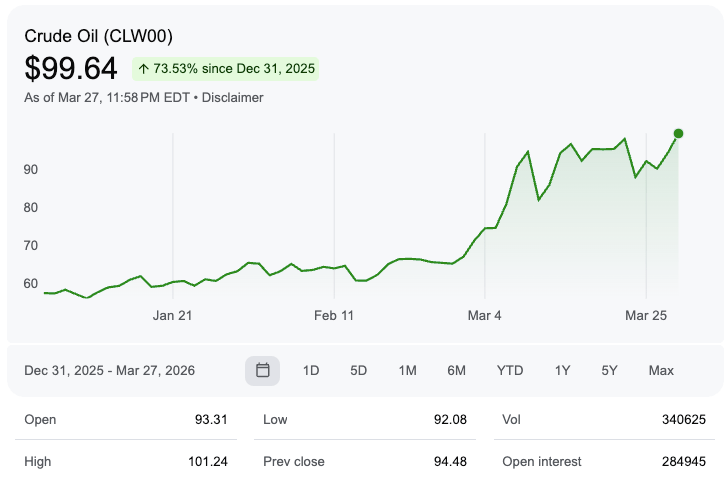
  1. Short-Term Volatility: Markets initially dipped on “supply-glut” fears before rebounding to over $112 Brent and $105 WTI due to the high “war premium” currently priced into every barrel.
  2. Long-Term Bearish Outlook: Analysts at CNN Business and Yahoo Finance note that by stripping OPEC of its primary source of spare capacity, the cartel’s ability to “floor” prices is permanently weakened. This could lead to significantly lower prices once regional stability returns.

The Market in General: Winners and Losers

The exit is a blow to the cartel’s cohesion but a potential boon for Western markets.

  • U.S. Relations: Experts believe the U.S. government welcomes the move as it curbs the cartel’s overall pricing power.
  • Stock Market Shift: According to MarketWatch, the move creates clear winners in U.S. energy stocks, while industries like airlines and logistics may face continued margin pressure until regional shipping stabilizes.

Market analysis provided by The Macro Compass is for informational purposes only. Please consult with a financial advisor before making investment decisions.


The 100% Milestone: Navigating the Era of Triple-Digit Debt

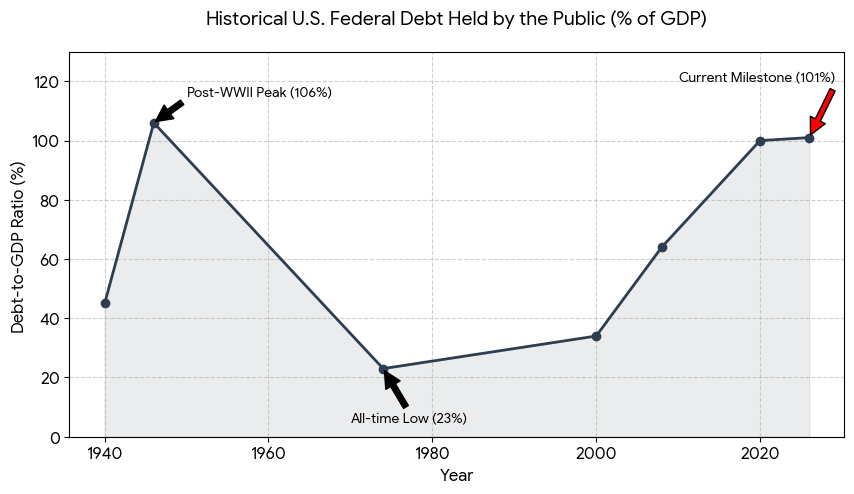
In March 2026, the United States crossed a psychological and economic Rubicon: the national debt officially exceeded 100% of the country’s Gross Domestic Product (GDP). While $31 trillion is a number so large it loses meaning, the 1:1 ratio is impossible to ignore. It means that for every dollar of value Americans produce in a year, the federal government owes a dollar to creditors.

This isn’t just a ledger entry; it’s a fundamental shift in the American economic story.

Why the 100% Ratio Matters

The debt-to-GDP ratio is often called the “credit score” of a nation. At 100%, the U.S. has entered a “danger zone” that economists have debated for decades.

  • The Tipping Point: Research from institutions like the Mercatus Center suggests that for advanced economies, debt becomes a “drag” on growth once it crosses roughly 75-80%. Every percentage point above this threshold is estimated to shave approximately 3.3 basis points off annual economic growth.
  • Fiscal Space: When a government is already maxed out, its “fiscal space”—the ability to borrow and spend during emergencies like pandemics or recessions—is severely limited.
  • The Interest Trap: As of 2026, interest payments on the debt have ballooned to over $1 trillion annually. For the first time in modern history, we are spending nearly as much on interest as we do on national defense.

Historical Context: From WWII to Today

The only other time the U.S. debt-to-GDP ratio reached these heights was in 1946, immediately following World War II, when it peaked at 106%. However, the “Great Drawdown” of the 1950s was driven by a post-war manufacturing boom and a younger population.

Today’s climb is structural, not temporary. It is driven by an aging population, rising healthcare costs, and a persistent gap where spending averages 21% of GDP while revenue stays at 18%.

How This Affects the Markets

Investors should prepare for a “new normal” where fiscal health dictates market volatility.

  1. “Crowding Out” Effect: When the government borrows trillions, it competes with the private sector for capital. This “crowding out” can lead to higher long-term interest rates, making it more expensive for businesses to expand and for consumers to get mortgages.
  2. Bond Market Jitters: We are seeing increased sensitivity in the Treasury market. If investors begin to doubt the U.S. government’s ability to service this debt without resorting to inflation (printing money), they will demand higher yields, leading to further price drops in existing bonds.
  3. The Growth Ceiling: High debt levels correlate with slower GDP growth. For equity markets, this could mean a lower “ceiling” for corporate earnings over the next decade.

The Bottom Line

Crossing 100% isn’t a guaranteed collapse—countries like Japan have operated at over 200% for years due to strong institutional trust. However, for the U.S., it marks the end of “consequence-free” borrowing.

As the Congressional Budget Office projects the ratio to hit 120% by 2036, the conversation must shift from “if” we should address the deficit to “how” drastically we must rebalance.


Market analysis provided by The Macro Compass is for informational purposes only. Please consult with a financial advisor before making investment decisions.
End of an Era: Markets Brace for Powell’s Final Act Amid Inflation Storm

The financial world is fixated on Washington this week for the Federal Reserve’s April 28–29 policy meeting. While the headline rate decision is almost certain to be a “no-change” at 3.50%–3.75%, the subtext is anything but quiet.

Between the energy price shocks from the Middle East conflict and a looming leadership change from Jerome Powell to Kevin Warsh, investors are navigating a “perfect storm”. Recent data showing inflation surging to 3.3% has effectively erased hope for near-term relief, forcing Wall Street to accept that rates will likely stay “higher for longer”.

For markets, the real volatility won’t come from the 2:00 PM statement, but from Powell’s final press conference. Will he use his swan song to cement a hawkish legacy against rising prices, or will he maintain a neutral stance to hand over a stable economy to his successor? One thing is certain: with a 100% market consensus for a pause, any deviation in tone will cause immediate ripples across the S&P 500 and the U.S. dollar.


The Federal Open Market Committee (FOMC) is widely expected to keep interest rates unchanged at its April 29, 2026, meeting, maintaining the federal funds target range at 3.50%–3.75%. Market sentiment has shifted significantly due to rising inflation and geopolitical uncertainty, with traders now pricing in a nearly 100% probability of a third consecutive pause.

FOMC Meeting Forecast: April 29, 2026

  • Rate Decision: A “virtual lock” to hold rates steady.
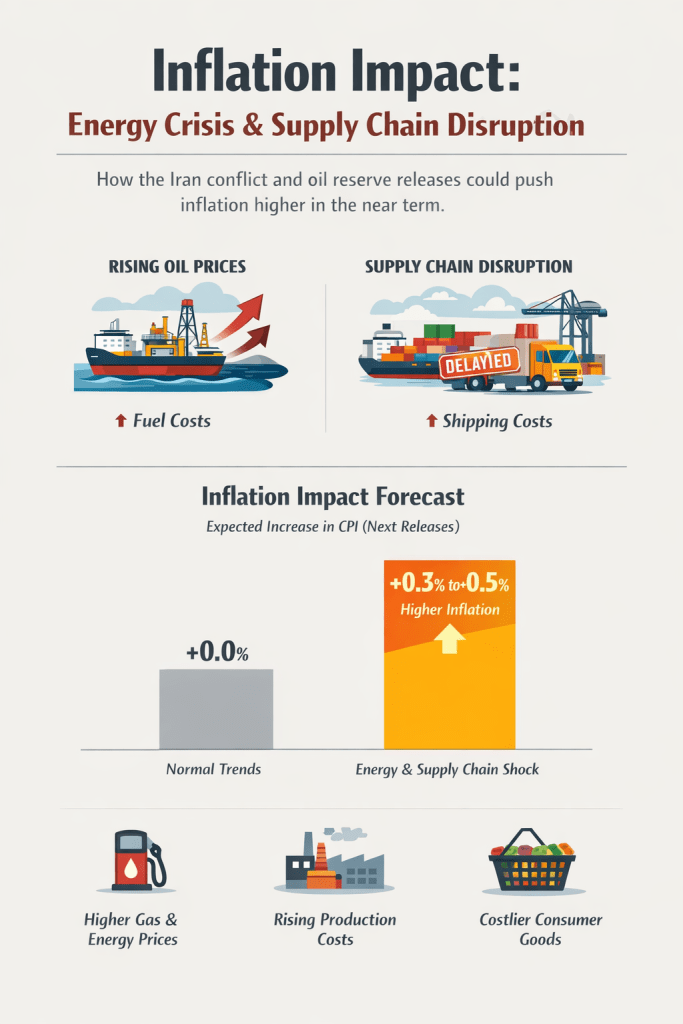
  • Inflation Pressures: Consumer Price Index (CPI) inflation jumped to 3.3% in March from 2.4% in February, driven largely by skyrocketing energy costs related to the ongoing war in Iran.
  • Leadership Transition: This is likely to be Jerome Powell’s final meeting as Chair before his term expires on May 15. Kevin Warsh is expected to be his successor.
  • Forward Guidance: Experts anticipate the Fed will adopt a “wait-and-see” approach, with some officials potentially signaling a hawkish pivot (discussing future rate hikes) if inflation remains unanchored.

Market Impact Analysis

  • Equities: Stocks have recently shown vulnerability due to the removal of anticipated rate cuts from the 2026 outlook. A hawkish tone from Powell could further pressure high-growth sectors like AI infrastructure.
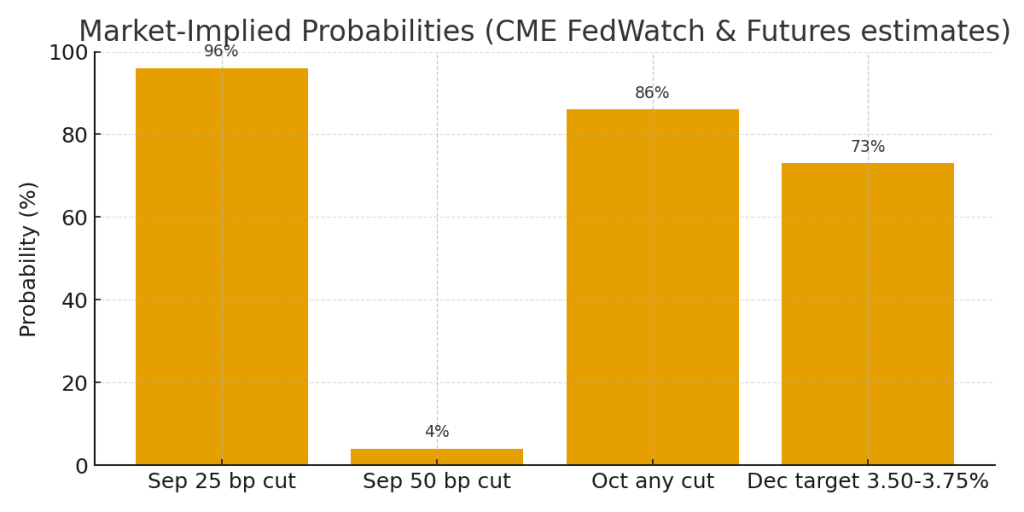
  • Fixed Income: Markets are now pricing in a “prolonged holding pattern,” with CME’s FedWatch tool showing zero expectation of a cut this month.
  • Currencies: The U.S. Dollar Index (DXY) is currently testing key technical levels near its 200-day moving average; a focus on inflation risks during the press conference could trigger a hawkish rally.

Market analysis provided by The Macro Compass is for informational purposes only. Geopolitical events are highly volatile; please consult with a financial advisor before making investment decisions based on conflict-related data.

Diplomatic Deadlock: How Trump’s Scrapped Pakistan Talks Could Shake the Markets Next Week

The high-stakes diplomatic gamble in Islamabad has hit a wall. On Saturday, President Trump abruptly canceled the peace talks between U.S. and Iranian officials in Pakistan, citing “tremendous infighting and confusion” within the Iranian leadership.

While the President insists this isn’t an immediate return to war, the global markets—which hate nothing more than uncertainty—are bracing for a turbulent Monday morning. Here is what investors and analysts are watching as we head into the new trading week.

1. Energy Markets: The Squeeze Continues

The most immediate impact will be felt at the pump and on the energy exchanges. With the Strait of Hormuz remaining closed and a second U.S. aircraft carrier joining the naval blockade, the failed breakthrough in Pakistan leaves no clear exit ramp for the current supply crisis. Crude oil prices, already under immense pressure, are expected to remain elevated or spike further as the “diplomatic premium” fades.

2. A “Risk-Off” Monday?

Early indicators suggest a bumpy ride for equities. The Invesco QQQ Trust (QQQ) showed downward movement in after-hours trading immediately following the announcement. As the hope for a “permanent deal” cools, we expect a classic “risk-off” rotation:

  • Safe Havens: Look for potential movement toward gold, Treasuries, and the U.S. dollar as investors seek shelter from geopolitical volatility.
  • Tech and Growth: These sectors may face headwinds if inflationary fears regarding energy costs continue to rise.

3. The Inflation Shadow

Perhaps the most concerning takeaway for the broader economy is the threat of “hyperinflation.” Analysts warn that the longer these critical trade routes remain blocked and diplomatic channels stay silent, the more likely we are to see a sustained rise in the cost of goods globally.

The Bottom Line

The departure of Iranian Foreign Minister Abbas Araghchi from Islamabad without a deal has effectively hit the “pause” button on regional stability. While the U.S. administration maintains a posture of high-readiness rather than active conflict, the market’s reaction will likely be one of caution.

Expect volatility to be the theme of the week. Investors should keep a close eye on real-time energy updates and any further messaging from the White House regarding the status of the naval blockade.


Market analysis provided by The Macro Compass is for informational purposes only. Geopolitical events are highly volatile; please consult with a financial advisor before making investment decisions based on conflict-related data.

The 2026 Resilience Report: Navigating the Middle East Crisis and the “Safe-Haven” Paradox

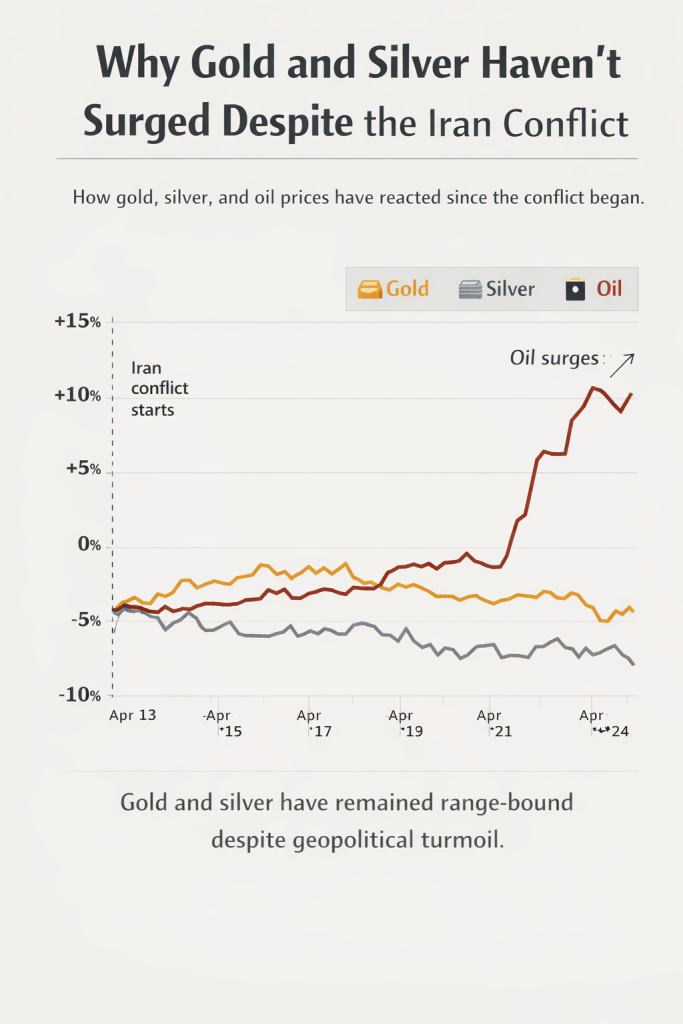
As March 2026 concludes, escalating military tensions and the closure of the Strait of Hormuz are triggering an economic crisis with surging oil prices and rising inflation in essential goods. Investors are urged to hedge with metals and consider energy stocks due to an extreme Gold-to-Oil ratio, while a strengthening dollar influences gold prices.

As we enter the final week of March 2026, the global economy is facing a perfect storm. With “Operation Epic Fury” escalating and up to 10,000 additional U.S. troops headed to the Middle East, the Strait of Hormuz remains a volatile chokepoint that is effectively redrawing the map for American investors.

For the readers of The Macro Compass, the primary question isn’t just “What is happening?” but “How do I protect my capital?” Here is your strategic navigational chart for the week ahead.


The Energy Shock: Beyond the Gas Pump

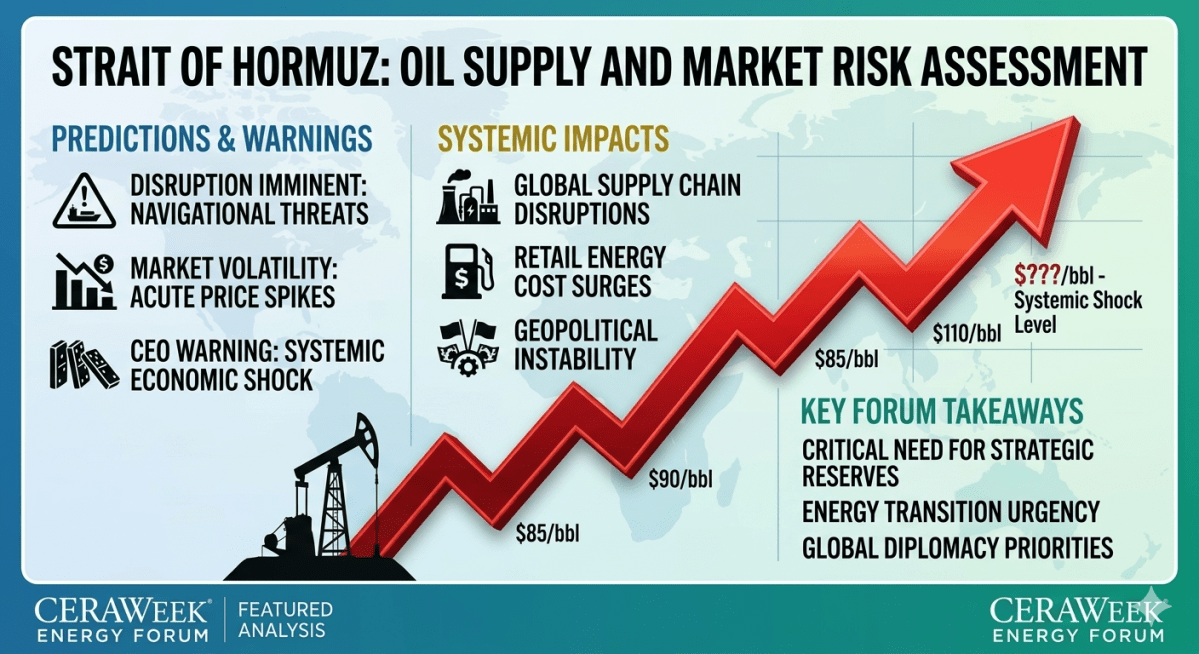
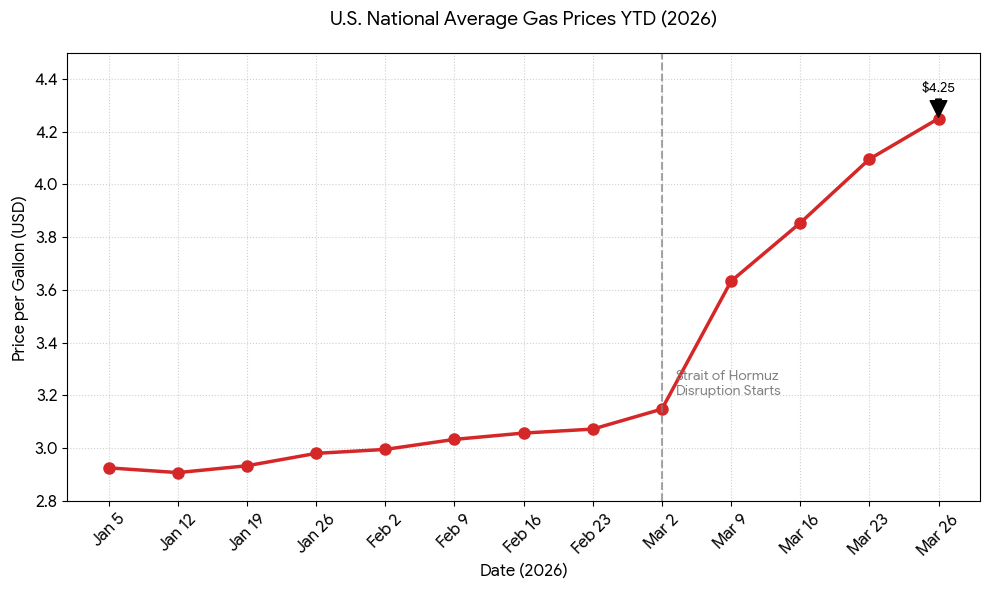
The closure of the Strait is no longer a regional headline—it is a systemic shock to the cost of living. With 20% of global oil and 25% of liquefied natural gas (LNG) currently trapped, Brent crude has surged past $112 a barrel.

  • The Inflationary Tsunami: At the recent CERAWeek conference in Houston, oil CEOs like Chevron’s Mike Wirth and Aramco’s Amin Nasser warned that we are underestimating the “physical manifestations” of this closure.
  • The Hidden Hit: It’s not just fuel. The region is a titan in the fertilizer market. With supply lines cut, global farming costs have jumped 38%, a move that guarantees double-digit food inflation through the next harvest cycle.

The Safe-Haven Paradox: Are Metals Still the Answer?

When the drums of war beat louder, the traditional playbook says “buy gold.” But in 2026, that playbook is being rewritten by a surging U.S. Dollar.

  • Gold ($4,524/oz): Gold remains the ultimate “portfolio insurance,” but we are seeing a sharp pullback from January’s highs of $5,600. This isn’t a lack of faith; it’s a scramble for liquidity.
  • Silver ($94/oz): Caught in a “dual identity” crisis, silver is both a monetary hedge and a critical component in the AI and 5G revolutions. Despite recent volatility, the structural supply deficit makes it a strong long-term play.
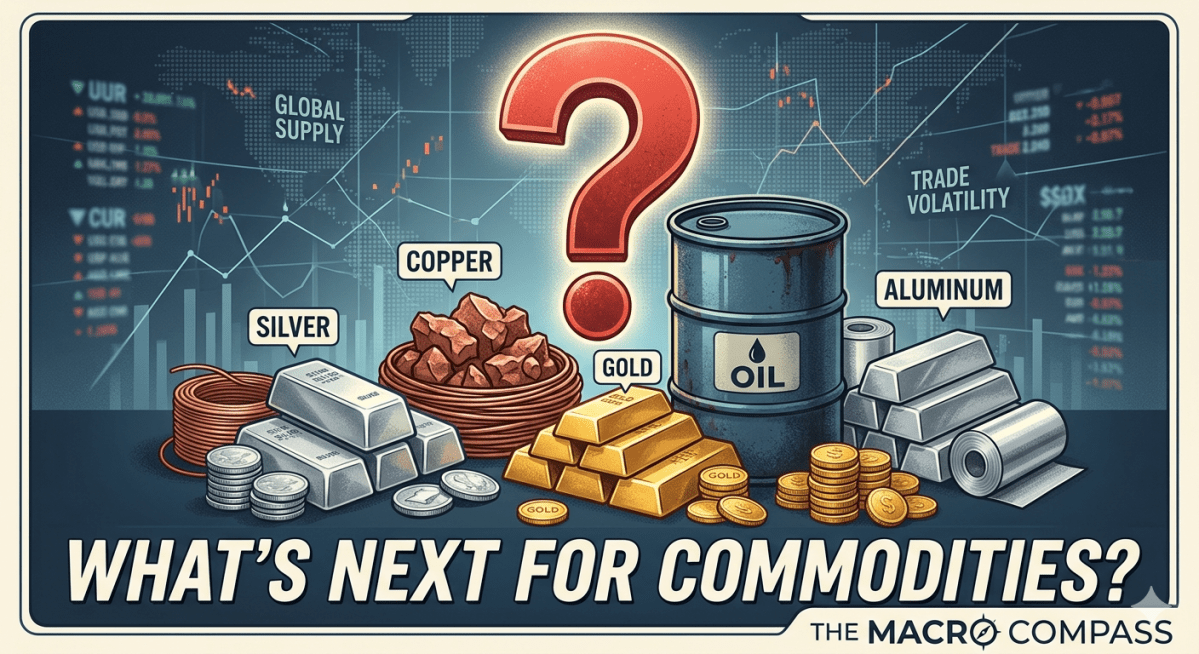
  • Base Metals: If you want to know where consumer prices are headed, watch Copper and Aluminum. Both have surged as international buyers pay record premiums to secure supply.

Strategic Rotation: The Gold-to-Oil Ratio

The Macro Compass is currently tracking a historic anomaly. The Gold-to-Oil Ratio—the number of barrels of oil an ounce of gold can buy—is sitting at a staggering 40:1.

Historically, this ratio hovers around 15 to 20. A ratio this high suggests that while gold has done its job as a hedge, energy equities (XLE) are now significantly “cheaper” relative to bullion than they have been in decades. We are transitioning from a “buy everything” metals phase to a selective accumulation phase where energy stocks may offer better value.


The Bottom Line: A “Risk-Off” Reality

President Trump has characterized the military buildup as leverage for a peace deal, but the markets are pricing in a prolonged conflict. Expect continued volatility in the S&P 500, which has already shed over 4% this month.

The Macro Compass Strategy:

  1. Hedge with Metals: Maintain a 5%–10% “insurance” allocation in physical gold or silver.
  2. Rotate into Energy: Look for entries in diversified energy producers while the Gold-to-Oil ratio remains at extremes.
  3. Watch the Dollar: A strengthening USD will act as a “ceiling” for gold prices in the short term.

Market analysis provided by The Macro Compass is for informational purposes only. Geopolitical events are highly volatile; please consult with a financial advisor before making investment decisions based on conflict-related data.

“Economic Terrorism”: Energy Titans Warn of a Long-Term Crisis at the Strait of Hormuz

Energy executives at CERAWeek warned that the global economy is underestimating the blockade at the Strait of Hormuz, leading to a severe supply crisis. With 20% of global oil stranded and systemic inflation rising, the impact on prices for consumers will be significant. The situation is expected to disrupt the economy for months.

The world’s most powerful energy executives gathered this week at the CERAWeek conference in Houston, and their message was blunt: the global economy is drastically underestimating the severity of the blockade at the Strait of Hormuz. What started as a regional military standoff has evolved into what ADNOC CEO Sultan Al Jaber calls “economic terrorism against every nation.”

As “Operation Epic Fury” enters its second month, here is the reality check from the men and women who run the world’s oil and gas supply.

The “Nightmare Scenario” for Supply

For weeks, the market hoped for a quick resolution. The CEOs have officially ended that optimism. Chevron CEO Mike Wirth warned that investors are trading on “scant information” and have not yet felt the “physical manifestations” of the closure.

The logistical math is grim:

  • Stranded Assets: Roughly 20% of global oil and 25% of liquefied natural gas (LNG) are currently trapped behind the blockade.
  • The “Help!” Calls: Cheniere Energy CEO Jack Fusco revealed he is receiving desperate calls from Asian buyers as the final pre-war shipments of Qatari gas make landfall. Once those are gone, the “dry spell” begins.
  • Infrastructure Damage: Saudi Aramco’s Amin Nasser confirmed that missile and drone attacks have caused “catastrophic” damage to regional infrastructure, meaning supply won’t just “flicker back on” even if the Strait opens tomorrow.

The Inflationary Tsunami: What This Means for Your Wallet

The primary concern for consumers is no longer just the price of a gallon of gas; it’s the systemic inflation triggered by a $112+ barrel of oil.

  1. “Cost-Push” Inflation: When energy costs spike, the cost of manufacturing and transporting everything follows. We are seeing a “cascading effect” where prices for groceries, plastics, and electronics are adjusted upward weekly to account for surging freight and power costs.
  2. The Fertilizer Crisis: Shell CEO Wael Sawan noted that the shock is moving West. Because the Middle East is a hub for fertilizer production, the blockade is driving up farming costs globally, guaranteeing double-digit food inflation through the next harvest cycle.
  3. The Fed’s Corner: With energy-driven inflation soaring, the Federal Reserve faces a “Stagflation” trap—forced to keep interest rates high to battle rising prices even as the military conflict threatens to slow down global economic growth.

Market Reaction: A “Risk-Off” Reality

The CEOs’ warnings have sent a chill through Wall Street. ExxonMobil CEO Darren Woods noted that the company has already evacuated non-essential staff from the region, a move mirrored by many multinationals.

Investors are pivoting away from high-growth tech stocks and toward “defensive” plays:

  • Winners: Large-cap Energy (XLE) and Defense contractors remain the only green spots on the board.
  • Losers: Airlines and Retailers are being hammered by the dual threat of high fuel surcharges and cooling consumer demand.

The Bottom Line: The “Leverage” strategy of deploying 10,000 more troops is being watched closely, but the energy industry is already bracing for a multi-month disruption. As Kuwait Petroleum’s CEO put it, the global economy is currently being “held hostage,” and the ransom is being paid by every consumer at the checkout counter.


Market analysis provided by The Macro Compass is for informational purposes only. Geopolitical events are highly volatile; please consult with a financial advisor before making investment decisions based on conflict-related data.

The Global Chokepoint: Why the Closure of the Strait of Hormuz Matters to Your Wallet

The world’s most important maritime artery has been constricted, and the pulse is being felt in every corner of the global economy. As the Strait of Hormuz remains effectively closed to a significant portion of global trade this March 2026, we are no longer just looking at a regional conflict—we are looking at a systemic shock to the cost of living.

Here is how the closure of this 21-mile-wide passage is rippling through the economy and, more importantly, your bank account.

The Energy Shock: Beyond the Gas Pump

The Strait is the transit point for roughly 25% of the world’s liquid natural gas (LNG) and 20% of its oil. With these supplies stranded, Brent crude has surged past $112 a barrel.

  • The Inflation Direct Hit: Rising fuel costs are the “tax” that everyone pays. High energy prices increase the cost of producing and transporting nearly every physical good on earth.

The Kitchen Table: Food and Fertilizer

This is the hidden crisis. The Middle East is a titan in the fertilizer market, responsible for one-third of the world’s seaborne trade in urea and ammonia.

  • The Inflation Ripple: With fertilizers stuck behind the blockade, prices have jumped 38%. This isn’t just a problem for farmers; it’s a guaranteed price hike for wheat, fruits, and vegetables (already up 5.2%) in the coming months. When it costs more to grow food, it costs more to buy it.

Manufacturing and Tech: The Helium & Plastic Crisis

It’s not just oil. The region is a massive exporter of petrochemicals (the building blocks of plastic) and helium.

  • The Industry Strain: If you’re looking for a new car, a laptop, or even medical services like an MRI, costs are climbing. Helium is essential for semiconductor cooling and medical magnets. The scarcity of these raw materials is forcing manufacturers to raise MSRPs to protect their margins.

Logistics: The Long Way Around

Shipping companies are now rerouting vessels around the Cape of Good Hope. This adds 15 to 20 days to transit times and sends insurance premiums through the roof.

  • The Consumer Delay: “Just-in-time” supply chains are breaking down. Expect longer wait times for imported goods and “surcharges” on shipping and airfare as airlines struggle with the massive spike in jet fuel costs.

The Bottom Line: A Stagflationary Threat

The primary concern for the week ahead is Stagflation—a toxic mix of stagnant economic growth and high inflation. As the “cost of everything” rises due to these supply chain breaks, the Federal Reserve faces a nightmare scenario: they may be forced to keep interest rates high to fight inflation, even as the economy begins to slow down under the weight of the conflict.

The closure of the Strait isn’t just a headline about distant tankers; it’s a direct pressure cook on global inflation that will likely define the economic landscape for the rest of the year.

Troops on the Move: What Wall Street Expects for the Week Ahead

The geopolitical temperature in the Middle East just hit a boiling point, and investors are bracing for the impact. As the U.S. prepares to deploy up to 10,000 additional ground troops to the region, the market’s “wait and see” approach is rapidly shifting into a “risk-off” sprint.

If you’re watching your portfolio this weekend, here is the breakdown of how the market is expected to react when the opening bell rings on Monday, March 30, 2026.

The Oil Factor: $200 a Barrel?

Energy is the primary engine of this volatility. With “Operation Epic Fury” entering its second month, Brent crude has already climbed past $112. However, analysts at Macquarie Group warn that if the conflict escalates further—specifically involving the closure of the Strait of Hormuz—we could see a historic spike toward $200 per barrel. This isn’t just a gas pump problem; it’s a massive inflationary headwind that could force the Federal Reserve to keep interest rates high.

Equity Markets: The Correction Search

The S&P 500 has already shed over 4% in March, and the bleeding might not be over. Many strategists suggest that a formal ground invasion could trigger a broader 8% to 10% correction.

  • The Losers: Tech giants and growth stocks (the “Magnificent Seven”) are feeling the heat as rising Treasury yields make their future earnings less attractive.
  • The Winners: Energy (XLE) and Defense sectors continue to outperform the broader market as military spending and oil prices surge.

The Flight to Safety

When the drums of war beat louder, investors hide in the classics. Expect the U.S. Dollar and Gold to see continued strength next week. Gold, in particular, remains the ultimate hedge against the “Stagflation” fears—rising prices coupled with slowing growth—that are currently haunting global markets.

The “Peace Deal” Wildcard

The biggest variable remains the rhetoric from the White House. While troop movements signal escalation, President Trump has maintained that this buildup is a negotiating tactic to force a peace deal with Iran. He has predicted the economy will “take off like a rocket ship” once a resolution is reached. Whether the market believes that “leverage” story or prepares for a prolonged conflict will dictate the swing of every trading session next week.

The Bottom Line: Expect a bumpy ride. High-tempo combat operations are projected to last at least another two to four weeks, meaning volatility is the new “normal” for the foreseeable future.

Why the Fed Might Hike Rates Next — Even When Everyone Expected Cuts

For most of 2026, the narrative seemed straightforward: inflation was cooling, the labor market was stabilizing, and the Federal Reserve would likely begin cutting interest rates.

That narrative is now… shaky.

A mix of geopolitical shocks, stubborn inflation signals, and a still-resilient labor market has forced investors—and the Fed—to reconsider. What once looked like a clear path to easing policy has turned into a “wait… could they actually hike again?” moment.

Let’s break down why.


1. Geopolitical Tensions Are Reigniting Inflation

The biggest wildcard right now is geopolitics—specifically the escalating conflict involving Iran and disruptions in global energy markets.

Oil prices have surged sharply due to supply concerns, with key shipping routes like the Strait of Hormuz under threat. That matters because energy costs ripple through everything: transportation, food, manufacturing, and ultimately consumer prices.

  • Oil shocks historically feed directly into inflation
  • Higher energy costs reduce consumer spending power
  • Businesses pass increased costs onto consumers

Fed officials are already warning that prolonged disruptions could push inflation higher again and shift expectations—one of the Fed’s biggest fears.

And here’s the problem: the Fed cannot cut rates into rising inflation. If anything, it may need to lean the other way.


2. The Market Has Rapidly Repriced Rate Expectations

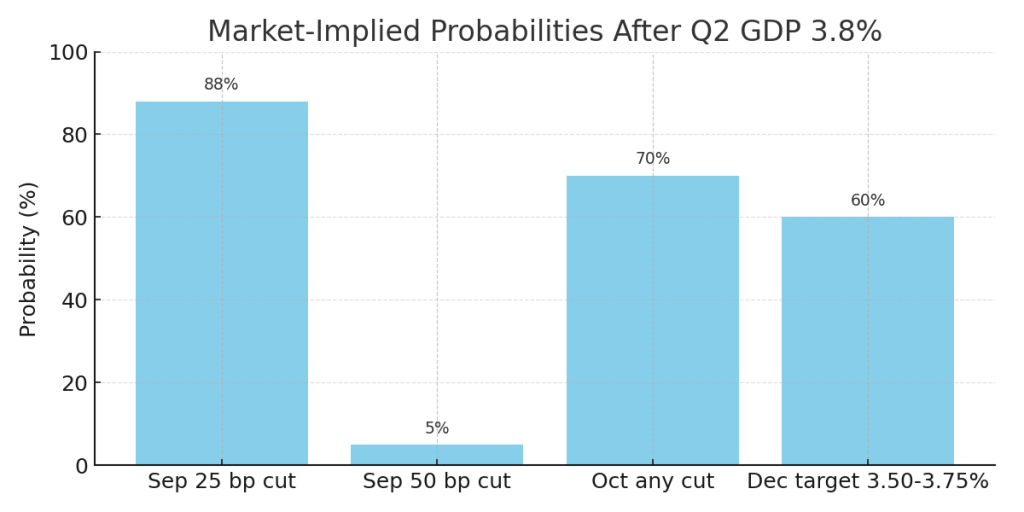
Just weeks ago, markets were pricing in multiple rate cuts for 2026.

Now? That’s changed dramatically.

  • Treasury yields have surged
  • Borrowing costs are rising across the economy
  • Markets are increasingly pricing out cuts—and even considering hikes

This shift is being driven largely by inflation fears tied to geopolitics and commodity prices.

In other words, the bond market is starting to say:
“Maybe policy isn’t restrictive enough anymore.”


3. Inflation Isn’t Fully Dead Yet

Even before geopolitical tensions escalated, inflation wasn’t exactly “mission accomplished.”

  • It remains above the Fed’s 2% target
  • Services inflation has been sticky
  • Commodity prices are rising again

Fed Governor Michael Barr recently emphasized that inflation is still elevated and may require rates to stay higher for longer.

Now layer on top:

  • Rising oil prices
  • Potential supply chain disruptions
  • Increased global risk premiums

Suddenly, inflation risks are no longer fading—they’re reaccelerating.


4. The Labor Market Isn’t Weak Enough to Force Cuts

If the job market were collapsing, the Fed would have a clear reason to cut rates.

But that’s not happening.

Instead:

  • Job growth is slowing, but still stable
  • Unemployment remains relatively low
  • Wage pressures haven’t fully cooled

This creates a tricky situation:
The Fed doesn’t have the “economic emergency” it would need to justify easing.

In fact, a stable labor market gives the Fed room to stay restrictive—or even tighten further if inflation re-emerges.


5. The Fed Is Stuck Between Two Risks

Right now, policymakers are dealing with a classic dilemma:

Risk #1:
Cut too early → inflation comes roaring back

Risk #2:
Stay too tight → trigger a recession

Add geopolitical uncertainty into the mix, and even Fed officials admit they’re essentially “driving through a fog.”

That uncertainty is exactly why the idea of a rate hike—once unthinkable this year—is now being discussed again.


6. So… Will the Fed Actually Hike?

Let’s be real: a hike is still not the base case.

Most forecasts still lean toward:

  • Holding rates steady in the near term
  • Possibly cutting later in the year

But the key shift is this:

👉 A hike is no longer off the table.

If the following happen:

  • Oil stays elevated
  • Inflation ticks higher
  • The labor market remains resilient

…then the Fed may have no choice but to consider tightening again.


Final Thoughts

The market went from confidently expecting rate cuts… to questioning whether policy is tight enough.

That’s a big shift—and it happened fast.

Right now, the Fed’s next move isn’t just about economic data. It’s about how multiple forces collide:

  • Geopolitics driving energy prices
  • Inflation proving stubborn
  • Labor markets refusing to crack

The result?

A central bank that was preparing to ease… now forced to stay cautious—and possibly even turn hawkish again.

“U.S. ‘Insolvent’? What the Treasury Numbers Really Mean for the Markets”

The Headlines Are Alarming—but Don’t Panic

Recently, a flurry of media coverage claimed that the U.S. government is “insolvent.” At first glance, this sounds like a red alert for investors—but the reality is more nuanced. The Treasury’s latest report does show that long-term obligations exceed assets. This includes future commitments like Social Security, Medicare, and federal pensions. On paper, that looks like insolvency—but it’s very different from running out of cash or defaulting on debt tomorrow.


Why the U.S. Isn’t Going Broke

Unlike a private company, the U.S. government has tools that keep it solvent in practice:

  • It can raise taxes
  • It can borrow in its own currency
  • It can coordinate with the Federal Reserve to manage liquidity

This is why U.S. Treasuries remain the world’s “risk-free” benchmark, even as debt grows. The so-called insolvency is really a long-term fiscal warning, not an immediate financial crisis.


What This Means for Markets

While the headline is unlikely to trigger a sudden market collapse, there are some important implications:

  1. Rising Yields Over Time – Bigger deficits mean more Treasury issuance, which can push interest rates higher. Higher yields generally pressure stock valuations, especially growth-heavy sectors.
  2. Interest Rate Pressure – Persistent deficits could keep yields structurally higher, either through more borrowing or inflationary pressure if the Fed monetizes debt.
  3. Dollar and Global Demand Risk – If foreign investors slow Treasury purchases, it could weaken the dollar and push yields even higher—but this is a long-term theme, not a day-to-day driver.
  4. Political Tail Risks – Debt ceiling standoffs or delayed payments can spark market volatility. The risk is not accounting insolvency but policy dysfunction, which has triggered short-term spikes in the past.

The Bottom Line

The takeaway for investors:

  • The U.S. “insolvency” story is an accounting technicality, not an imminent market disaster.
  • Its real impact is gradual, influencing interest rates, valuations, and the macro backdrop over the coming years.

In short: don’t panic at the headlines—but keep an eye on the long-term pressures shaping rates and market valuations.