The global energy market is currently at a high-stakes crossroads. On May 4, 2026, the U.S. will officially launch Project Freedom, a major initiative to provide military escorts for commercial vessels through the Strait of Hormuz. This move, announced by President Donald Trump, aims to break a weeks-long maritime gridlock that has paralyzed one of the world’s most critical energy chokepoints.
The Current Crisis in the Strait
The Strait of Hormuz, a narrow waterway south of Iran, typically handles roughly 20% of the world’s oil and liquefied natural gas (LNG). Since the outbreak of conflict in February 2026, passage has become a high-risk gamble:
- Widespread Blockades: Iranian-laid sea mines and threats of drone or missile strikes have effectively closed the channel to most neutral commercial traffic.
- Stranded Cargo: Approximately 230 oil tankers and numerous LNG carriers are currently idle in the Persian Gulf, unable to deliver their vital loads to global markets.
- Insurance Shocks: Tanker insurance rates skyrocketed to over 10 times their normal levels, making passage economically unfeasible for most shipping lines.
How Escorts Affect Oil Prices
Markets have historically reacted sharply to news regarding the Strait, and Project Freedom is already shifting the narrative.
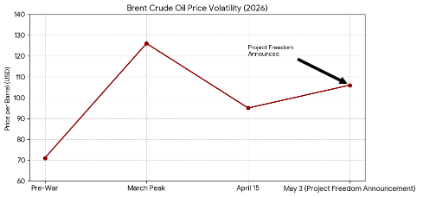
- Stabilizing the Supply: By guiding stranded tankers out of the Gulf, the U.S. Navy aims to inject millions of barrels of crude back into the global supply chain. Initial reactions saw Brent crude dip toward $106 per barrel following the announcement, down from peaks of over $120.
- Lowering Risk Premiums: The U.S. is also offering affordable political risk insurance through the Development Finance Corporation to encourage shipping lines to resume transits.
- Inflationary Pressures: Despite the escorts, prices remain roughly 50% above pre-conflict levels. Experts at U.S. News & World Report note that every $10 increase in crude can raise American gas prices by 25 cents, contributing to wider inflationary concerns.
Broader Market Impacts
The ripples of the Hormuz crisis extend far beyond the fuel pump:
- Shipping & Logistics: The backlog of ships has caused extreme spikes in overall shipping costs, affecting the price of global goods.
- Agriculture: Disruption to fertilizer production—specifically nitrogen and phosphorus—threatens global food security, as rising costs may lead farmers to reduce usage.
- Asian Markets: Countries like China, India, Japan, and South Korea are the most vulnerable, as they historically receive over 80% of the oil transiting the Strait.
While the U.S. Navy‘s presence provides a tactical solution, the long-term health of the market depends on whether this move leads to a broader de-escalation or a further hardening of regional conflict.
Market analysis provided by The Macro Compass is for informational purposes only. Please consult with a financial advisor before making investment decisions.
Discover more from Evergreen Financial News
Subscribe to get the latest posts sent to your email.

 Evergreen Financial News