Operation “Project Freedom”: Naval Escorts in the Strait of Hormuz

The global energy market is currently at a high-stakes crossroads. On May 4, 2026, the U.S. will officially launch Project Freedom, a major initiative to provide military escorts for commercial vessels through the Strait of Hormuz. This move, announced by President Donald Trump, aims to break a weeks-long maritime gridlock that has paralyzed one of the world’s most critical energy chokepoints.

The Current Crisis in the Strait

The Strait of Hormuz, a narrow waterway south of Iran, typically handles roughly 20% of the world’s oil and liquefied natural gas (LNG). Since the outbreak of conflict in February 2026, passage has become a high-risk gamble:

  • Widespread Blockades: Iranian-laid sea mines and threats of drone or missile strikes have effectively closed the channel to most neutral commercial traffic.
  • Stranded Cargo: Approximately 230 oil tankers and numerous LNG carriers are currently idle in the Persian Gulf, unable to deliver their vital loads to global markets.
  • Insurance Shocks: Tanker insurance rates skyrocketed to over 10 times their normal levels, making passage economically unfeasible for most shipping lines.

How Escorts Affect Oil Prices

Markets have historically reacted sharply to news regarding the Strait, and Project Freedom is already shifting the narrative.
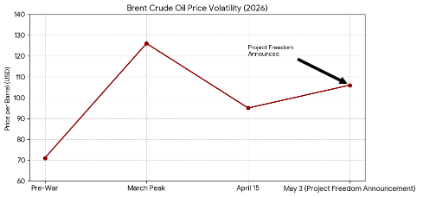
  • Stabilizing the Supply: By guiding stranded tankers out of the Gulf, the U.S. Navy aims to inject millions of barrels of crude back into the global supply chain. Initial reactions saw Brent crude dip toward $106 per barrel following the announcement, down from peaks of over $120.
  • Lowering Risk Premiums: The U.S. is also offering affordable political risk insurance through the Development Finance Corporation to encourage shipping lines to resume transits.
  • Inflationary Pressures: Despite the escorts, prices remain roughly 50% above pre-conflict levels. Experts at U.S. News & World Report note that every $10 increase in crude can raise American gas prices by 25 cents, contributing to wider inflationary concerns.

Broader Market Impacts

The ripples of the Hormuz crisis extend far beyond the fuel pump:

  • Shipping & Logistics: The backlog of ships has caused extreme spikes in overall shipping costs, affecting the price of global goods.
  • Agriculture: Disruption to fertilizer production—specifically nitrogen and phosphorus—threatens global food security, as rising costs may lead farmers to reduce usage.
  • Asian Markets: Countries like China, India, Japan, and South Korea are the most vulnerable, as they historically receive over 80% of the oil transiting the Strait.

While the U.S. Navy‘s presence provides a tactical solution, the long-term health of the market depends on whether this move leads to a broader de-escalation or a further hardening of regional conflict.


Market analysis provided by The Macro Compass is for informational purposes only. Please consult with a financial advisor before making investment decisions.
The Global Chokepoint: Why the Closure of the Strait of Hormuz Matters to Your Wallet

The world’s most important maritime artery has been constricted, and the pulse is being felt in every corner of the global economy. As the Strait of Hormuz remains effectively closed to a significant portion of global trade this March 2026, we are no longer just looking at a regional conflict—we are looking at a systemic shock to the cost of living.

Here is how the closure of this 21-mile-wide passage is rippling through the economy and, more importantly, your bank account.

The Energy Shock: Beyond the Gas Pump

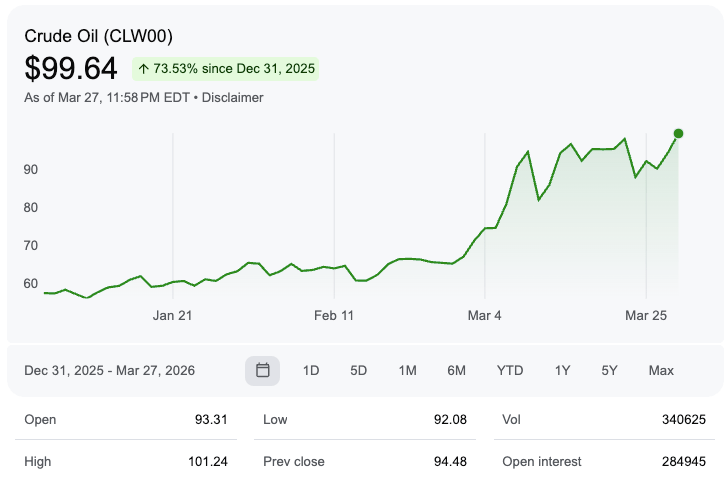
The Strait is the transit point for roughly 25% of the world’s liquid natural gas (LNG) and 20% of its oil. With these supplies stranded, Brent crude has surged past $112 a barrel.

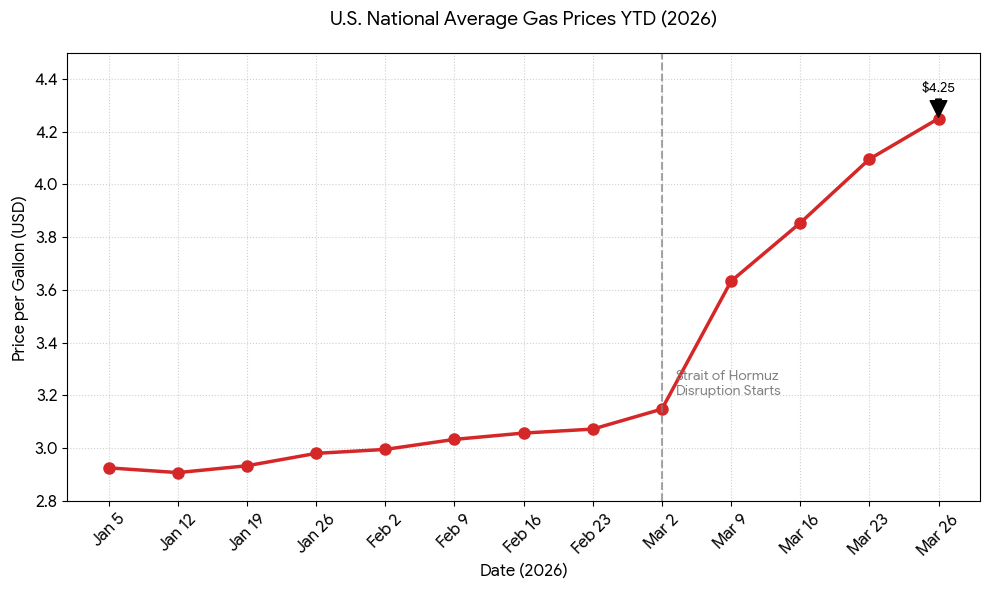
  • The Inflation Direct Hit: Rising fuel costs are the “tax” that everyone pays. High energy prices increase the cost of producing and transporting nearly every physical good on earth.

The Kitchen Table: Food and Fertilizer

This is the hidden crisis. The Middle East is a titan in the fertilizer market, responsible for one-third of the world’s seaborne trade in urea and ammonia.

  • The Inflation Ripple: With fertilizers stuck behind the blockade, prices have jumped 38%. This isn’t just a problem for farmers; it’s a guaranteed price hike for wheat, fruits, and vegetables (already up 5.2%) in the coming months. When it costs more to grow food, it costs more to buy it.

Manufacturing and Tech: The Helium & Plastic Crisis

It’s not just oil. The region is a massive exporter of petrochemicals (the building blocks of plastic) and helium.

  • The Industry Strain: If you’re looking for a new car, a laptop, or even medical services like an MRI, costs are climbing. Helium is essential for semiconductor cooling and medical magnets. The scarcity of these raw materials is forcing manufacturers to raise MSRPs to protect their margins.

Logistics: The Long Way Around

Shipping companies are now rerouting vessels around the Cape of Good Hope. This adds 15 to 20 days to transit times and sends insurance premiums through the roof.

  • The Consumer Delay: “Just-in-time” supply chains are breaking down. Expect longer wait times for imported goods and “surcharges” on shipping and airfare as airlines struggle with the massive spike in jet fuel costs.

The Bottom Line: A Stagflationary Threat

The primary concern for the week ahead is Stagflation—a toxic mix of stagnant economic growth and high inflation. As the “cost of everything” rises due to these supply chain breaks, the Federal Reserve faces a nightmare scenario: they may be forced to keep interest rates high to fight inflation, even as the economy begins to slow down under the weight of the conflict.

The closure of the Strait isn’t just a headline about distant tankers; it’s a direct pressure cook on global inflation that will likely define the economic landscape for the rest of the year.