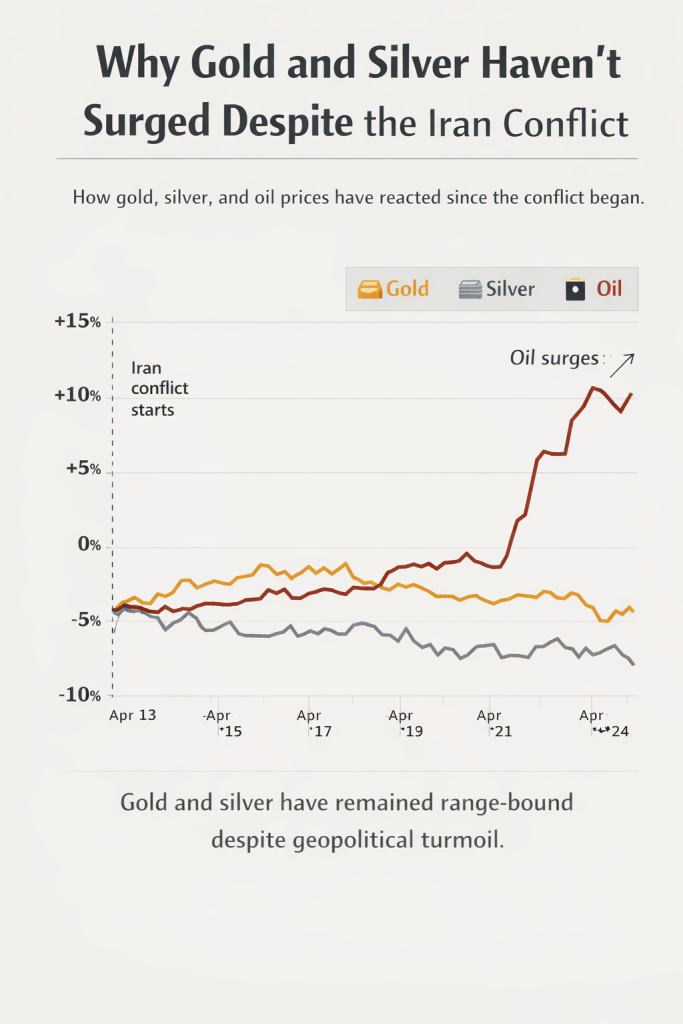
Reason for Recent Metal Meltdown

Here’s a clear, data-backed explanation of why gold and silver recently sold off so sharply.


🔥 1) Shift in monetary policy expectations (the Fed/WARSH effect)

One of the biggest catalysts was the market’s reaction to U.S. President Trump nominating Kevin Warsh as the next Federal Reserve Chair. Investors interpreted this as signaling less aggressive rate cuts and a more hawkish stance than what many had been pricing in. A stronger dollar and expectations of higher real yields make non-yielding assets like gold and silver less attractive, so traders sold them off. (Reuters)

In short:

  • Hawkish Fed expectations → USD strength
  • USD strength → metal prices pressured lower

📉 2) Profit-taking after record rallies

Both metals had previously gone on an extraordinarily strong run, with gold and silver hitting historic highs due to safe-haven demand, inflation fears, geopolitical tensions, and speculative momentum. When prices get stretched far above typical valuation ranges, traders tend to lock in profits once sentiment shifts. That selling can snowball quickly. (The Economic Times)

This is classic:

“Prices go up fast → traders take money off the table → momentum reverses.”


⚙️ 3) Leverage and margin pressure (mechanical selling)

Because gold and especially silver markets have a lot of leveraged positions (futures, margin accounts), a shift lower can trigger margin calls and forced liquidations — meaning traders must sell to meet collateral requirements. Some exchanges also raised margin requirements, which tightened liquidity and forced even more selling. This can exaggerate the drop beyond what fundamentals alone would suggest. (Ventura Securities)

This is a technical amplification:

  • Margins up → forced selling
  • Forced selling → stop-losses hit
  • Stop-losses → more selling

💵 4) Stronger U.S. dollar and bond yields

Gold and silver often trade inversely to the USD and real yields:

  • When the dollar strengthens, gold and silver become more expensive in other currencies → less demand
  • Higher real yields increase the “opportunity cost” of holding non-yielding metals

This dynamic was triggered by changing rate expectations and risk repricing. (The Economy)


🪙 5) Sentiment flip: safe haven → risk rebalancing

Earlier, investors were piling into metals as safe havens against inflation, de-dollarization fears, political risk, and geopolitical tensions. That narrative started to weaken as:

  • The Fed picture changed
  • Some risk assets stabilized
  • Dollar got bid

Markets rotated back into risk assets and away from defensives like gold/silver — accelerating the selloff. (The Economy)


📊 6) Extreme volatility and technical exhaustion

Metal prices had become extremely overbought, both technically and sentiment-wise:

  • Silver was outpacing gold dramatically
  • Many traders were holding leveraged positions
  • Prices reached levels that lacked strong support below them

This set up a classic parabolic move → sharp correction scenario. (Forbes)


🧠 Summarizing the “Perfect Storm”

The sell-off wasn’t caused by one single factor — it was the intersection of several:

  1. Policy signal shift (Fed expectations becoming less dovish)
  2. Profit-taking after historic rallies
  3. Margin and leverage dynamics forcing selling
  4. U.S. dollar strength and yield effects
  5. Sentiment rotation out of safe haven assets
  6. Technical exhaustion and overbought conditions

This is why the moves were so sharp and broad across gold, silver and even other commodities. (Reuters)


🧩 Equivalent Market Interpretation

  • Gold: safe haven + tactical hedge
  • Silver: both safe haven and industrial demand play

When the macro narrative pivots from fear → recalibration, both of these can be hit hard — even if supply/demand fundamentals don’t change immediately. (LatestLY)


💡 How analysts are talking about it

Many sources describe this as a correction to an overshot market, not necessarily a collapse of the long-term bullish case — though the volatility and speed are noteworthy and can shake speculative traders out before fundamentals adjust. (Forbes)


Intro to Kevin Warsh

Let do a deep dish into Kevin Warsh — not the bio stuff, but how he thinks, how markets would re-price under him, and why people are split.


Kevin Warsh: Deep Dive 🧠📊

1️⃣ His core worldview (this matters more than labels)

Warsh is often described as an inflation hawk, but that’s incomplete.

A better framing:

He’s a credibility hawk.

He believes:

  • The Fed lost credibility by staying too loose for too long
  • Balance sheet expansion distorted markets
  • Monetary policy became a substitute for fiscal discipline (which he hates)

He’s less obsessed with today’s CPI print and more worried about:

  • Long-term inflation expectations
  • Dollar credibility
  • Political capture of the Fed

2️⃣ His biggest break with Powell-era Fed

Warsh vs Powell in one sentence:

  • Powell: “We’ll adjust policy as data evolves”
  • Warsh: “Policy mistakes come from bad frameworks, not bad data”

What Warsh dislikes:

  • QE becoming “normal”
  • Emergency tools used in non-emergencies
  • Forward guidance that locks the Fed into corners

He’s publicly criticized:

  • The size of the Fed’s balance sheet
  • The belief that inflation was “transitory”
  • The Fed’s communication becoming political theater

3️⃣ Is he really dovish now?

This is the trickiest part — and where markets can misread him.

Here’s the nuance:

Warsh can support lower rates if:

  • Inflation expectations are anchored
  • Fiscal policy is credible
  • The Fed regains institutional authority

But he hates cutting rates:

  • To support asset prices
  • To finance deficits
  • To bail out bad fiscal policy

So:

He is not dovish by default — he’s conditional.

This is very different from how markets currently price Fed behavior.


4️⃣ Treasury–Fed “coordination” (this is the controversy)

Warsh has floated the idea of a new Treasury-Fed Accord.

Supporters say:

  • Better crisis coordination
  • Less policy confusion
  • Clearer division of labor

Critics hear:

  • Reduced Fed independence
  • Political pressure on rates
  • Debt monetization risk

Markets would immediately ask:

“Is the Fed still the adult in the room?”

This is the single biggest market risk if Warsh becomes Chair.


5️⃣ What markets would do under a Warsh Fed

📉 USD (initially volatile, then stronger)

Short term:

  • FX volatility
  • Some concern about independence

Medium term:

  • USD likely stronger
  • Warsh prioritizes credibility + inflation expectations
  • Less tolerance for persistent negative real rates

Think:

Less structural USD bleed, more discipline.


📈 Rates & bonds

This is where the biggest repricing happens.

  • Short end: more policy uncertainty
  • Long end: depends on credibility

If markets believe:

  • Warsh reins in QE
  • Forces fiscal discipline indirectly

👉 Long-term yields could fall despite tighter rhetoric.

If not?
👉 Term premium explodes.


📉 Stocks

  • Short-term: choppy, multiple compression risk
  • Long-term: healthier market structure

Tech:

  • Loses some “Fed put” premium
  • But benefits if USD stabilizes and inflation risk drops

Small caps:

  • More vulnerable (less balance sheet resilience)

🥇 Gold

Gold’s reaction to Warsh is fascinating:

  • If Warsh restores Fed credibility → gold down
  • If Treasury–Fed coordination looks political → gold rips

Gold becomes a confidence barometer, not just inflation hedge.


6️⃣ Why Trump likes Warsh (important context)

This isn’t just about rates.

Warsh:

  • Understands markets deeply
  • Communicates clearly (investors respect him)
  • Criticizes Fed bureaucracy without sounding reckless

Trump:

  • Wants lower rates
  • Wants someone who looks credible
  • Wants someone markets won’t instantly revolt against

Warsh is the “respectable regime change” candidate.


7️⃣ Senate confirmation risk

This won’t be smooth.

Expect questions on:

  • Fed independence
  • Coordination with Treasury
  • Views on QE and crisis tools

Markets will trade:

  • Confirmation odds
  • Tone of testimony
  • First hints about balance sheet policy

This process alone can move:

  • USD
  • Gold
  • Long bonds

8️⃣ Big picture: why Warsh matters right now

This is happening at a fragile moment:

  • USD already weakening
  • Deficits exploding
  • Shutdown risk
  • Geopolitical stress
  • Markets addicted to liquidity

Warsh represents:

A possible pivot away from “liquidity-first” policy.

That’s why:

  • Some investors are excited
  • Some are deeply nervous

Bottom line (the honest take)

If Warsh becomes Fed Chair:

✅ Pros:

  • Stronger institutional credibility
  • Less policy drift
  • Better inflation anchoring
  • Potential USD stabilization

⚠️ Risks:

  • Market tantrums
  • Reduced Fed flexibility
  • Political pressure optics
  • Mistiming tightening in a fragile economy

He’s not a chaos candidate, but he would force markets to grow up a bit.


Risk of a Government Shutdown and Possible Market Reaction

Here’s the current situation (as of late Jan 29, 2026) on whether the U.S. government is likely to shut down — and why:

📅 What’s on the clock

Funding for much of the federal government is set to expire at midnight on January 30, 2026. If Congress does not pass the remaining appropriations bills or a temporary spending measure (a continuing resolution or “CR”) by then, a partial government shutdown could begin. (Government Executive)

⚠️ Why chances of a shutdown are growing

  • Senate Democrats are threatening to block a key spending bill unless it includes significant immigration enforcement reforms tied to the Department of Homeland Security (DHS) funding. (Reuters)
  • Republicans and Democrats are at an impasse over these reforms, and negotiations have not progressed enough to lock in a deal before the weekend deadline. (AP News)
  • Although the House passed a bipartisan FY 2026 funding package earlier in January, the Senate still needs to approve the remaining parts — and that has become a sticking point. (Government Executive)

Several indicators — including betting markets and political commentary — suggest a moderate to high probability (50–80%+) of a shutdown occurring if no last-minute deal is reached. (Coinpedia Fintech News)


🧠 What kind of shutdown is most likely?

Based on current reporting:

🔹 Partial shutdown

If only some appropriations bills lapse (e.g., DHS, transportation, DOD portions), then parts of the government would halt operations while others stay funded. This is currently the most likely form, since about half of the agencies are already funded through previous bills. (Government Executive)

🔹 Not likely a full repeat of 2025

Last year’s shutdown (Oct–Nov 2025) was a full fiscal-year lapse and became the longest in U.S. history. (CRFB)
This time around, because several appropriations bills are already signed and the House worked to pass the rest, a partial shutdown — if it occurs — is more likely and probably shorter.


📌 What does a shutdown mean in practical terms?

If a shutdown begins:

  • Non-essential federal operations would pause, and some employees may be furloughed.
  • Essential services (e.g., Social Security, military operations, air traffic control) continue, but others (like research agencies, some administrative functions) could slow or stop.
  • Agencies often have contingency plans outlining what functions continue and what furloughs occur. (CRFB)

Also worth noting: even if a shutdown happens, core services such as certain immigration enforcement operations may continue due to prior funding allocations. (The Washington Post)


🗓️ Bottom line

There is a real risk of a government shutdown as early as January 31, especially a partial one, if Congress doesn’t finish funding or pass a continuing resolution by the Jan 30 deadline. (Government Executive)
⚠️ Politically driven disputes — especially over DHS and immigration policy — are the main barrier to a deal right now. (Reuters)

1️⃣ Initial market reaction (first few days)

📉 Stocks

  • Mild selloff or chop (often −0.5% to −2%)
  • Mostly driven by headlines, not fundamentals
  • Traders fade panic once it’s clear essentials keep running

Historically:

Markets shrug off short shutdowns surprisingly fast.


💵 USD

  • Often slightly weaker
  • Shutdown = governance dysfunction → mild confidence hit
  • Especially true if it delays economic data or Fed clarity

🏦 Bonds (Treasuries)

  • Front end (short-term): little impact
  • Long end: can actually rally at first (risk-off)
  • But if shutdown drags on → yields can rise due to confidence concerns

🥇 Gold / 🥈 Silver

  • Usually bullish
  • Shutdowns reinforce:
    • political dysfunction
    • fiscal irresponsibility
    • uncertainty

Gold especially likes the combo of:

shutdown + weak USD + rate cut expectations


2️⃣ What matters more than the shutdown itself

⏱️ Duration

This is the big one.

LengthMarket Impact
1–7 daysMostly noise
1–3 weeksGrowth fears creep in
1+ monthLegit market risk

Long shutdowns:

  • Delay GDP, CPI, jobs data
  • Hurt consumer confidence
  • Force analysts to cut estimates

🏦 Fed complications

If key data (jobs, CPI) gets delayed:

  • Fed has less clarity
  • Markets price in more dovish policy
  • USD weakens further
  • Volatility rises

Ironically, this can support stocks short-term while increasing longer-term risk.


3️⃣ Sector-by-sector impact

❌ Losers

  • Government contractors
  • Defense suppliers (if payments delayed)
  • Travel / tourism (if TSA disruptions worsen)
  • Small caps with federal exposure

✅ Relative winners

  • Mega-cap tech (less domestic dependence)
  • Gold & miners
  • Utilities & defensives
  • Multinationals (FX tailwind)

4️⃣ Why markets don’t panic (usually)

Key point:

The U.S. does not default in a shutdown.

  • Debt payments continue
  • Treasury auctions still happen
  • Social Security & military still operate

That’s why shutdowns ≠ debt ceiling crises.


5️⃣ When a shutdown DOES become dangerous

Markets start caring if it morphs into:

  • 💣 Debt ceiling brinkmanship
  • 💸 Treasury auction stress
  • 🌍 Foreign selling of U.S. assets
  • 📉 Credit rating threats

That’s when:

  • USD drops harder
  • Yields spike
  • Stocks stop shrugging it off

Bottom line

  • 📉 Short shutdown: minor volatility, fadeable dip
  • 🟡 Medium shutdown: USD weaker, gold stronger, stocks choppy
  • 🔴 Long / politicized shutdown: real macro risk

Given everything else in play right now (rates, USD weakness, geopolitical tension):

A shutdown would add pressure, not be the sole trigger.


Will the Feds Hold Interest Rates Steady?

Here’s the current consensus around U.S. Federal Reserve interest rate expectations — are markets expecting the Fed to hold rates steady or cut them? The answer is both in different time frames, and the context matters a lot:

🔹 Short-term outlook (next Fed meeting)

  • The Fed is widely expected to hold interest rates steady at the upcoming January 2026 meeting, with no cut announced right now. (Investopedia)
  • Fed officials are signaling they want to keep policy focused on data, not politics, and aren’t likely to cut this week. (AP News)
  • Wall Street commentary also suggests policymakers are more cautious than aggressive on rate moves right now. (Morningstar)

Bottom line: Hold expected at current levels (often cited around 3.5–3.75% as of the latest cycle). (Trading Economics)


🔸 Medium-term view (through 2026)

Here, opinions diverge:

Markets still price in potential cuts later in 2026

  • Some economic projections (dot plots) have shown markets expecting one or two quarter-point cuts later this year as inflation cools. (Trading Economics)
  • A nonpartisan U.S. budget office report also projects a lower final rate by year-end 2026. (The Telegraph)

⚠️ But many economists now think cuts may not happen until later or not at all

  • Recent surveys of economists show most think the Fed will hold through at least the first quarter and possibly longer due to inflation still above the 2% target and continued moderate economic growth. (Investing.com)
  • Some major bank forecasts (e.g., JPMorgan) have shifted to expecting no rate cuts in 2026 and even a potential hike later if growth and jobs stay strong. (Reddit)

Why this divergence?

  • Inflation: still above the Fed’s 2% target in many measures.
  • Labor market: remains relatively tight in parts of the data.
  • Economic growth: decent enough that the Fed may not need to cut quickly.

📊 So what’s the practical expectation?

Here’s a simplified market consensus snapshot:

Time frameExpected Fed action
Next policy meeting (Jan 2026)Hold steady
1Q–2Q 2026Still likely hold; cuts not widely expected yet
Late 2026Some markets price possible cuts, but economists are mixed

🧠 Key drivers shaping expectations

No cut likely right now because:

  • Inflation remains elevated vs target.
  • Fed officials emphasize data dependency.
  • Economic resilience (especially jobs) reduces urgency for easing. (CBS News)

Cuts could still happen later if:

  • Inflation falls closer to target.
  • Growth slows meaningfully.
  • Labor market weakens.

🔎 What markets are currently pricing

Financial markets (via futures and yield curves) still reflect some probability of cuts by mid-late 2026 — but those odds have been pulled back recently as strong data and official comments push the expected timing later. (Trading Economics)


📌 Bottom line

Right now: The Fed is expected to hold rates steady at the next meeting.
Looking forward through 2026: There’s no strong consensus yet — market pricing suggests possible cuts later in the year, but many economists now think cuts may be delayed or may not come if inflation and growth stay firm.

Implications if EU Liquidates US Treasuries

With Trump pushing the U.S. to acquire Greenland, this could seriously damages trans-Atlantic relations. If the EU responds by liquidating (or even signaling liquidation of) U.S. Treasuries, here’s what that would actually imply — economically, financially, and strategically.


🧭 First, context check (important)

Greenland is tied to Denmark (EU/NATO).
So this isn’t just a bilateral spat — it’s interpreted as:

  • U.S. pressure on European sovereignty
  • A test of alliance trust
  • A reminder that Treasuries can be political leverage

That framing is what markets would react to.


🧨 Immediate market implications (if EU action is credible)

📉 1. U.S. Treasuries: yields spike

  • EU institutions are large, price-insensitive holders
  • Even threats of liquidation would:
    • Push 10Y–30Y yields higher
    • Steepen the yield curve
  • Auction demand weakens → higher term premium

📌 Translation:
Higher borrowing costs for:

  • Mortgages
  • Corporations
  • U.S. deficits (this is the big one)

💱 2. USD: short-term up, medium-term down

Short-term:

  • Risk shock → USD reflexively rises

Medium-term:

  • Reserve diversification narrative accelerates
  • EUR, CHF, gold benefit
  • USD loses “unquestioned reserve” premium

📌 Markets would read this as:

“Treasuries are no longer politically neutral.”

That’s huge.


📉 3. U.S. equities: bearish, volatility spikes

  • Rising yields = valuation compression
  • Tech & growth hit hardest
  • Financials don’t necessarily benefit — disorderly yield moves hurt balance sheets

VIX goes up. Liquidity thins.


🪙 Safe havens & alternatives

🥇 Gold: strongly bullish

This is gold’s dream setup:

  • Geopolitical fracture
  • Weaponization of finance
  • Questioning sovereign debt safety
  • Reserve rebalancing by central banks

Gold wouldn’t just rise — it would reprice structurally higher.


🥈 Silver

  • Short-term: volatile (risk-off)
  • Medium-term: follows gold higher
  • Gold/Silver ratio initially spikes, then compresses

🌍 Systemic / strategic implications (this is the real story)

⚠️ 4. Alliance fracture premium

Markets would start pricing:

  • Political risk inside NATO
  • Less coordination on sanctions, defense, trade
  • Higher long-term uncertainty premiums

This is not priced into markets today.


🏦 5. Fed backstop becomes unavoidable

If EU selling is material:

  • The Fed would implicitly have to absorb supply
  • Balance sheet credibility comes into question
  • Fiscal dominance fears rise

📌 That’s inflationary over time, even if growth slows.


🌐 6. Accelerated financial bloc formation

This would push:

  • EU → greater euro-centric reserve strategy
  • More bilateral trade settlement outside USD
  • Faster movement toward regional financial systems

Not the end of dollar dominance — but the beginning of erosion, which markets hate.


📊 Asset impact summary

AssetImpact
Treasuries↓ Prices, ↑ Yields
USDShort ↑ / Medium ↓
U.S. equities↓ (growth worst)
EU assetsRelative ↑
Gold↑↑↑
SilverVolatile → ↑
VIX
Credit spreadsWiden

🧠 What markets would really focus on

Not Greenland itself — but:

  • Is this symbolic or strategic?
  • Is the EU acting coordinated?
  • Do others (Japan, Gulf states) quietly follow?
  • Does the U.S. respond financially or politically?

If answers trend the wrong way → systemic repricing.


🔑 Bottom line

If Greenland rhetoric escalates into EU Treasury liquidation:

  • This is not a normal geopolitical headline
  • It challenges the assumption that U.S. debt is untouchable
  • Gold becomes the clearest winner
  • U.S. financial conditions tighten fast
  • Markets price a more fragmented world

It wouldn’t cause a crash overnight —
but it would permanently raise the risk premium on U.S. assets.

How will Market Respond if SCOTUS rules against on Trump Tariffs


🧭 Big picture first (TL;DR)

Markets would likely react positively in the short term, with the biggest upside in stocks tied to global trade and supply chains. Volatility would drop, inflation expectations would ease, and bond yields would likely fall.


📈 Immediate market reaction (days to weeks)

Stocks: Bullish

If tariffs are struck down or constrained:

  • Broad equities up (especially the S&P 500 / Nasdaq)
  • Industrials, tech, retailers, and manufacturers rally
  • Companies with China/global exposure get relief

Why:
Tariffs = higher costs + margin pressure + uncertainty
Removing them = better earnings visibility + lower input costs

👉 This is a “risk-on” outcome for markets.


Inflation expectations: Down

Tariffs act like a tax on imports.

  • Removing them = lower goods inflation
  • Markets would price less upward pressure on CPI
  • That’s especially bullish if inflation is already trending lower

Bonds & rates: Yields fall

  • Lower inflation risk → Treasury yields likely drop
  • Rate-cut expectations may move forward
  • Bullish for bonds, growth stocks, and rate-sensitive sectors

USD (Dollar): Slightly weaker

  • Less trade friction → less need for “safe haven” USD
  • Lower yields also weigh on the dollar
  • Emerging market currencies may benefit

🏭 Sector-by-sector impact

Big winners

  • Tech (hardware, semiconductors, supply-chain heavy names)
  • Retail / consumer discretionary
  • Industrials
  • Transportation & logistics
  • Emerging markets

Relative losers

  • Domestic-only manufacturers previously protected by tariffs
  • Certain steel, aluminum, or niche industrial producers

(But overall market impact still likely positive.)


🧠 Volatility & sentiment

  • VIX likely drops
  • Reduced policy uncertainty = higher valuation multiples
  • Markets prefer clarity, even if they don’t love the politics

This would be seen as institutional guardrails returning, which Wall Street generally likes.


⚠️ Medium-term caveats (important)

This wouldn’t be a straight line up forever.

Things markets would still worry about:

  • Could Congress re-impose tariffs legislatively?
  • Could a future administration revive them?
  • Does the ruling trigger political backlash or retaliation?

So think relief rally, not permanent immunity.


📊 Historical pattern (useful context)

Markets have consistently reacted negatively to:

  • New tariffs
  • Trade wars
  • Retaliation headlines

And positively to:

  • Trade de-escalation
  • Court or legislative limits on tariff power
  • Predictable trade policy

This fits that pattern cleanly.


🧾 Bottom line

If SCOTUS rules against Trump on tariffs:

✅ Stocks: Up
✅ Inflation expectations: Down
✅ Bonds: Up (yields down)
✅ Volatility: Down
⚠️ Politics: Still a longer-term wildcard

How Will the Market Respond to the US Military Action in Venezuela

Here are some possible reactions in the financial markets and the economy:

🔥 1. Oil markets — the biggest immediate effect

  • Venezuela sits on the world’s largest proven oil reserves, so any conflict automatically draws energy market attention. (Reuters)
  • Short-term uncertainty tends to push oil prices up, because traders price in possible future supply disruptions. (FinTech News UK)
  • Some analysts say prices may stay relatively stable in the very short run due to current oversupply and lack of infrastructure damage, but it’s a fluid picture. (Business Insider)
  • If exports drop because of war, it tightens heavy crude supplies, which can raise gasoline and diesel costs globally. (GovFacts)

Market behavior summary
⚠️ Risk-off sentiment → bullish for oil
🛢️ If infrastructure is hit → significant oil price spikes possible
📉 If markets see stabilizing news → prices could pull back


📉 2. Equity markets & investor sentiment

  • Global stock markets typically react to geopolitical conflict with short-term volatility — equities may dip initially as risk aversion rises. (FinTech News UK)
  • Emerging market stocks often sell off first, while “safe havens” like U.S. Treasuries, gold, and certain currencies (JPY, USD) see inflows. (FinTech News UK)
  • Defense and energy stocks are often perceived as beneficiaries during geopolitical risk events (though this is speculative and not guaranteed). (See Reddit sentiment on this) (Reddit)

🪙 3. Commodities beyond oil

  • Gold and silver often rally in geopolitical stress due to safe-haven demand, though short-term swings can be unpredictable. (The Economic Times)
  • Metals like copper may also see pressure if global manufacturing growth slows due to increased energy costs and uncertainty. (The Economic Times)

📊 4. Broader market and economic implications

Inflation & consumer prices
👉 Rising oil and energy costs can feed into higher transport and consumer prices, adding inflationary pressure globally. (The Financial Analyst)

Supply chain & logistics
👉 Conflict in Venezuela can raise shipping insurance costs and disrupt regional trade routes, increasing costs for companies that rely on Latin American supply chains. (Discovery Alert)

Regional impact
👉 Neighboring countries may see capital flight and currency stress as investors pull back from Latin America due to perceived risk. (FinTech News UK)


📊 5. Longer-term outlook

The long-term market impact depends heavily on what happens next:

If a stable government emerges and sanctions ease:
✔️ Oil production and exports could eventually increase → long-term oil supply boost and investment returns. (Allianz Global Investors)

If conflict drags on:
⚠️ Continued volatility, higher risk premiums, sustained inflation pressure, and slower global growth. (FinTech News UK)


📉 Quick summary for investors

MarketLikely Reaction
Oil pricesUp or volatile
Stock marketsShort-term drop / volatility
Safe haven assets (Gold/Treasuries)Up
Emerging marketsRisk-off selling
Defense & energy equitiesPotential interest (speculative)

Probability of Another Rate Cut and Market Outlook

Here’s a breakdown of the likelihood of another Federal Reserve rate cut and what that could mean for markets:


✅ Probability of Another Rate Cut

  • Market-based tools (like the CME Group FedWatch Tool) show ≈ 90%+ probability of a 25-basis-point cut at the next meeting (late October 2025).
  • Futures markets are also pricing in ~70–80 basis points of total cuts in 2025 after the already-announced September cut.
  • While a cut is very likely, there’s uncertainty about magnitude and timing beyond the next meeting; the Fed emphasizes it’s not on a “preset path.”

📊 Market Outlook Given Another Rate Cut

What the market is likely to do

  • Stocks: Growth stocks (especially tech and long-duration names) and rate-sensitive sectors (housing, REITs) may rally as borrowing costs decrease and future earnings look more valuable.
  • Bonds: Short-term yields should fall as the policy rate is cut; long-term yields may fall too if growth/ inflation fears dominate, which means bond prices rise.
  • U.S. Dollar: Likely to weaken somewhat — lower short-term interest rates reduce foreign-investor demand for USD-denominated assets.
  • Gold & safe assets: Could benefit as real yields (nominal yields minus inflation) drop, enhancing the appeal of non-yielding but inflation/allocation assets.
  • Commodities: May get a boost, especially if the cut is seen as pre-emptive and supports growth; but if the cut signals deepening economic weakness, commodities may falter.

Potential caveats & risks

  • If the cut is seen as a signal of economic weakness (rather than confidence) — e.g., labor market weak, growth faltering — then markets may start to worry about earnings declines and recession risk, which could offset the initial positive reaction.
  • If inflation remains sticky, the Fed may highlight caution about further cuts; growth/tech may lag if rate cuts appear insufficient to stimulate.
  • The magnitude of reaction may depend on communication: how the Fed frames forward guidance matters as much as the cut itself.

Recession Worries and Effect on Market

Recession worries are one of the biggest drivers of market sentiment right now — even more than inflation or rates — because they affect earnings, consumer demand, and Fed policy expectations. Let’s break it down clearly:


⚠️ Why Recession Worries Are Rising

Several recent data points are fueling renewed concern:

  • Job revisions: BLS downward revision of ~911,000 jobs suggests the labor market was weaker than reported.
  • Consumer spending: Slowing in discretionary areas (travel, retail, autos) indicates households are tightening budgets.
  • Manufacturing and housing: Both showing contraction or stagnation — leading indicators of growth.
  • Yield curve inversion: Still one of the most reliable predictors of recession (2-year > 10-year).
  • Corporate commentary: Q3 earnings calls show more cautious outlooks, especially in cyclicals and tech hardware.

📉 How Markets React to Recession Fears

Market SegmentTypical ReactionExplanation
Equities🔻 Volatile or downInvestors anticipate lower corporate earnings; shift toward defensive sectors (utilities, healthcare, staples).
Bonds🔼 Prices up (yields down)Investors seek safety in Treasuries; flight to quality drives yields lower.
Commodities🔻 MixedOil and industrial metals fall on weaker demand expectations; gold may rise as a safe haven.
U.S. Dollar⚖️ MixedOften strengthens short-term as investors move into USD assets, but can weaken later if Fed cuts aggressively.
Tech & Growth Stocks🔻 Near-term hit, later reboundHigher rates + slower growth = weaker valuations, but rate cuts can later lift long-duration growth names.

🧩 Key Dynamic — “Bad News Is Good News”

In a slowing economy, markets often react paradoxically:

  • Weak data → Markets expect Fed rate cuts → Stocks and bonds may rise temporarily.
  • But if data turns too weak → Earnings fall sharply → Equities eventually correct.

So the balance between slowdown and policy support determines direction.


🔮 Outlook (as of now)

Here’s the market’s base case:

ScenarioProbabilityMarket Implication
Soft landing (no recession)~55%Stocks stabilize; Fed cuts slowly; moderate growth continues.
Mild recession (2025 Q1–Q2)~35%Equities correct 5–10%; bonds rally; Fed cuts more aggressively.
Deep recession~10%Broad risk-off; defensive sectors outperform; unemployment spikes.

📊 What Investors Are Watching

  1. Next jobs and CPI reports — confirm if slowdown + inflation easing = room for cuts.
  2. Corporate earnings guidance (Q4) — how companies see 2026 demand.
  3. Fed communications — tone shift toward risk management or “insurance cuts.”
  4. Credit spreads & defaults — early signs of financial stress.

🧭 Summary

Recession worries:

  • Increase market volatility.
  • Shift capital toward safe assets (bonds, gold, cash).
  • Lead investors to price in more Fed cuts.
  • Usually pressure equities until the policy response turns clear.

Market Recap Since Last Post

It’s been a couple of week since my last post. Here is a quick summary of the market.


📉 Early Week:

Markets opened soft—investors cautious about rates, earnings, and the economy.

📈 Late Week Recovery:

Dip buyers stepped in as treasury yields cooled and no major negative shocks hit.

🧭 Index Snapshot:

IndexWeekly ToneNotes
S&P 500 (SPY)Mixed → Modestly HigherRebounded off lows
Nasdaq (QQQ)ChoppyTech strong early, faded midweek
DowFlatIndustrials and banks lagged

Investor mood: Cautious optimism, but no conviction breakout.


🏦 FED & ECON POLICY

✅ Rate Hike Pause Likely

  • Fed speakers hinted they may hold rates steady, but aren’t signaling cuts yet.
  • This eased pressure on equities late in the week.

📉 Yields Pull Back Slightly

  • 10-Year Treasury backed off highs → helped growth/tech stocks.
  • Bond market volatility still keeping big funds cautious.

🧾 Inflation Data

  • No major surprises.
  • Some signs of cooling, but Fed wants more proof.

🚨 POLITICAL FACTORS / GOVERNMENT RISK

⚠️ Government Shutdown Threat Re-Emerging

  • Lawmakers are again under pressure to pass a funding bill.
  • If negotiations fail, even a short shutdown could rattle markets, especially:
    • Defense contractors
    • Federal contractors
    • Consumer confidence

No panic yet—but traders are watching headlines.

🟠 Election Cycle Ramps Up

  • Political posturing around spending & taxes is increasing volatility risk.
  • Markets dislike uncertainty → this could show up more next week.

🌍 Geopolitical Situations

  • Ongoing international tensions (e.g., Middle East, Ukraine, tariffs talk) haven’t disrupted markets yet.
  • Oil prices cooled off → helpful for inflation expectations.

🏛️ REGULATORY / POLICY IMPACT

  • Tech & AI regulation talk resurfaced in Congress — hasn’t hit valuations yet.
  • China trade policy and tariffs are still headline-sensitive, especially for:
    • AAPL
    • TSLA
    • Semis (NVDA, AMD)

📊 EARNINGS & MARKET DRIVERS

  • Mixed reactions in corporate earnings calls — no blowups, no euphoria.
  • Forward guidance is soft but acceptable.
  • Options flow favors SPY, NVDA, and AAPL calls into next week.

✅ BIG PICTURE TAKE

  • No meltdown, no breakout — just controlled chop.
  • Fed + politics + earnings = next week setup.
  • Shutdown talk could quickly flip sentiment if negotiations stall.
  • Traders are positioning for short bursts, not long swings.

Here are the sectors most likely to be affected by a potential government shutdown, plus those that would likely stay resilient or benefit:


🚨 Most at Risk if a Shutdown Hits

🏛️ 1. Government Contractors / Defense

Companies relying on federal contracts could see delayed payments or halted projects.

Examples:

  • Lockheed Martin (LMT)
  • Raytheon (RTX)
  • Northrop Grumman (NOC)
  • General Dynamics (GD)

🏢 2. Industrials & Infrastructure

Shutdowns stall planning, permits, energy projects, and public works.

Examples:

  • Caterpillar (CAT)
  • United Rentals (URI)
  • AECOM (ACM)
  • Construction suppliers

📉 3. Financials

Markets may see volatility, and lending activity slows if economic uncertainty pops.

Examples:

  • JPM, BAC, MS, GS
  • Regional banks

👔 4. Travel & Airlines

Government worker furloughs + reduced airport staff can disrupt flights & demand.

Examples:

  • Delta (DAL)
  • United (UAL)
  • Southwest (LUV)

🛍️ 5. Consumer Discretionary

A shutdown impacts spending confidence and government-backed consumer programs.

Examples:

  • Amazon (AMZN)
  • Home Depot (HD)
  • Nike (NKE)

🟡 Neutral or Mixed Impact

🏠 Real Estate

  • Higher volatility, but shutdowns don’t immediately change REIT performance.
  • Housing-related names might dip if mortgage processing slows.

✅ Sectors That Usually Hold Up or Benefit

🌡️ 1. Healthcare & Pharma

Medicare/Medicaid aren’t halted, and the sector is defensive.

Examples:

  • UNH, JNJ, PFE, MRK

⚡ 2. Utilities

Low-beta, defensive, and not dependent on government funding.

Examples:

  • DUK, SO, NEE

📱 3. Mega-Cap Tech / AI

These are less tied to federal funding and still attract inflows when volatility hits.

Examples:

  • AAPL, MSFT, NVDA, GOOG, META

🥫 4. Consumer Staples

People still buy essentials regardless.

Examples:

  • Costco (COST)
  • Walmart (WMT)
  • Procter & Gamble (PG)

🪙 5. Gold / Treasuries (Safe Havens)

If shutdown fear rattles markets, money rotates defensively.

Examples:

  • GLD (gold ETF)
  • TLT (treasuries ETF)