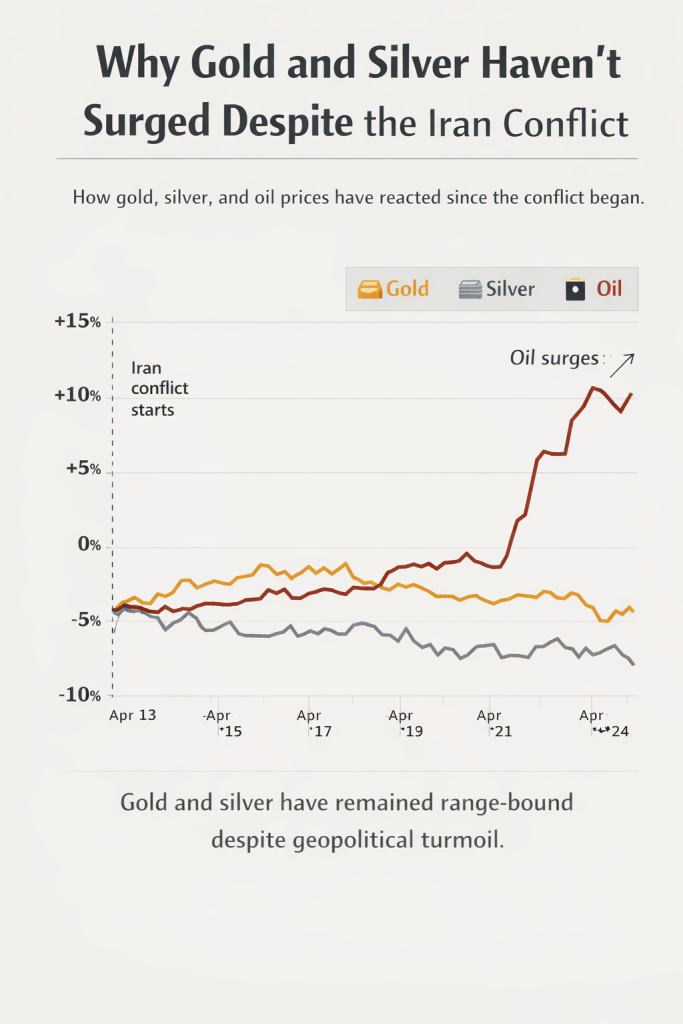
Reason for Recent Metal Meltdown

Here’s a clear, data-backed explanation of why gold and silver recently sold off so sharply.


🔥 1) Shift in monetary policy expectations (the Fed/WARSH effect)

One of the biggest catalysts was the market’s reaction to U.S. President Trump nominating Kevin Warsh as the next Federal Reserve Chair. Investors interpreted this as signaling less aggressive rate cuts and a more hawkish stance than what many had been pricing in. A stronger dollar and expectations of higher real yields make non-yielding assets like gold and silver less attractive, so traders sold them off. (Reuters)

In short:

  • Hawkish Fed expectations → USD strength
  • USD strength → metal prices pressured lower

📉 2) Profit-taking after record rallies

Both metals had previously gone on an extraordinarily strong run, with gold and silver hitting historic highs due to safe-haven demand, inflation fears, geopolitical tensions, and speculative momentum. When prices get stretched far above typical valuation ranges, traders tend to lock in profits once sentiment shifts. That selling can snowball quickly. (The Economic Times)

This is classic:

“Prices go up fast → traders take money off the table → momentum reverses.”


⚙️ 3) Leverage and margin pressure (mechanical selling)

Because gold and especially silver markets have a lot of leveraged positions (futures, margin accounts), a shift lower can trigger margin calls and forced liquidations — meaning traders must sell to meet collateral requirements. Some exchanges also raised margin requirements, which tightened liquidity and forced even more selling. This can exaggerate the drop beyond what fundamentals alone would suggest. (Ventura Securities)

This is a technical amplification:

  • Margins up → forced selling
  • Forced selling → stop-losses hit
  • Stop-losses → more selling

💵 4) Stronger U.S. dollar and bond yields

Gold and silver often trade inversely to the USD and real yields:

  • When the dollar strengthens, gold and silver become more expensive in other currencies → less demand
  • Higher real yields increase the “opportunity cost” of holding non-yielding metals

This dynamic was triggered by changing rate expectations and risk repricing. (The Economy)


🪙 5) Sentiment flip: safe haven → risk rebalancing

Earlier, investors were piling into metals as safe havens against inflation, de-dollarization fears, political risk, and geopolitical tensions. That narrative started to weaken as:

  • The Fed picture changed
  • Some risk assets stabilized
  • Dollar got bid

Markets rotated back into risk assets and away from defensives like gold/silver — accelerating the selloff. (The Economy)


📊 6) Extreme volatility and technical exhaustion

Metal prices had become extremely overbought, both technically and sentiment-wise:

  • Silver was outpacing gold dramatically
  • Many traders were holding leveraged positions
  • Prices reached levels that lacked strong support below them

This set up a classic parabolic move → sharp correction scenario. (Forbes)


🧠 Summarizing the “Perfect Storm”

The sell-off wasn’t caused by one single factor — it was the intersection of several:

  1. Policy signal shift (Fed expectations becoming less dovish)
  2. Profit-taking after historic rallies
  3. Margin and leverage dynamics forcing selling
  4. U.S. dollar strength and yield effects
  5. Sentiment rotation out of safe haven assets
  6. Technical exhaustion and overbought conditions

This is why the moves were so sharp and broad across gold, silver and even other commodities. (Reuters)


🧩 Equivalent Market Interpretation

  • Gold: safe haven + tactical hedge
  • Silver: both safe haven and industrial demand play

When the macro narrative pivots from fear → recalibration, both of these can be hit hard — even if supply/demand fundamentals don’t change immediately. (LatestLY)


💡 How analysts are talking about it

Many sources describe this as a correction to an overshot market, not necessarily a collapse of the long-term bullish case — though the volatility and speed are noteworthy and can shake speculative traders out before fundamentals adjust. (Forbes)


How Will the Market Respond to the US Military Action in Venezuela

Here are some possible reactions in the financial markets and the economy:

🔥 1. Oil markets — the biggest immediate effect

  • Venezuela sits on the world’s largest proven oil reserves, so any conflict automatically draws energy market attention. (Reuters)
  • Short-term uncertainty tends to push oil prices up, because traders price in possible future supply disruptions. (FinTech News UK)
  • Some analysts say prices may stay relatively stable in the very short run due to current oversupply and lack of infrastructure damage, but it’s a fluid picture. (Business Insider)
  • If exports drop because of war, it tightens heavy crude supplies, which can raise gasoline and diesel costs globally. (GovFacts)

Market behavior summary
⚠️ Risk-off sentiment → bullish for oil
🛢️ If infrastructure is hit → significant oil price spikes possible
📉 If markets see stabilizing news → prices could pull back


📉 2. Equity markets & investor sentiment

  • Global stock markets typically react to geopolitical conflict with short-term volatility — equities may dip initially as risk aversion rises. (FinTech News UK)
  • Emerging market stocks often sell off first, while “safe havens” like U.S. Treasuries, gold, and certain currencies (JPY, USD) see inflows. (FinTech News UK)
  • Defense and energy stocks are often perceived as beneficiaries during geopolitical risk events (though this is speculative and not guaranteed). (See Reddit sentiment on this) (Reddit)

🪙 3. Commodities beyond oil

  • Gold and silver often rally in geopolitical stress due to safe-haven demand, though short-term swings can be unpredictable. (The Economic Times)
  • Metals like copper may also see pressure if global manufacturing growth slows due to increased energy costs and uncertainty. (The Economic Times)

📊 4. Broader market and economic implications

Inflation & consumer prices
👉 Rising oil and energy costs can feed into higher transport and consumer prices, adding inflationary pressure globally. (The Financial Analyst)

Supply chain & logistics
👉 Conflict in Venezuela can raise shipping insurance costs and disrupt regional trade routes, increasing costs for companies that rely on Latin American supply chains. (Discovery Alert)

Regional impact
👉 Neighboring countries may see capital flight and currency stress as investors pull back from Latin America due to perceived risk. (FinTech News UK)


📊 5. Longer-term outlook

The long-term market impact depends heavily on what happens next:

If a stable government emerges and sanctions ease:
✔️ Oil production and exports could eventually increase → long-term oil supply boost and investment returns. (Allianz Global Investors)

If conflict drags on:
⚠️ Continued volatility, higher risk premiums, sustained inflation pressure, and slower global growth. (FinTech News UK)


📉 Quick summary for investors

MarketLikely Reaction
Oil pricesUp or volatile
Stock marketsShort-term drop / volatility
Safe haven assets (Gold/Treasuries)Up
Emerging marketsRisk-off selling
Defense & energy equitiesPotential interest (speculative)