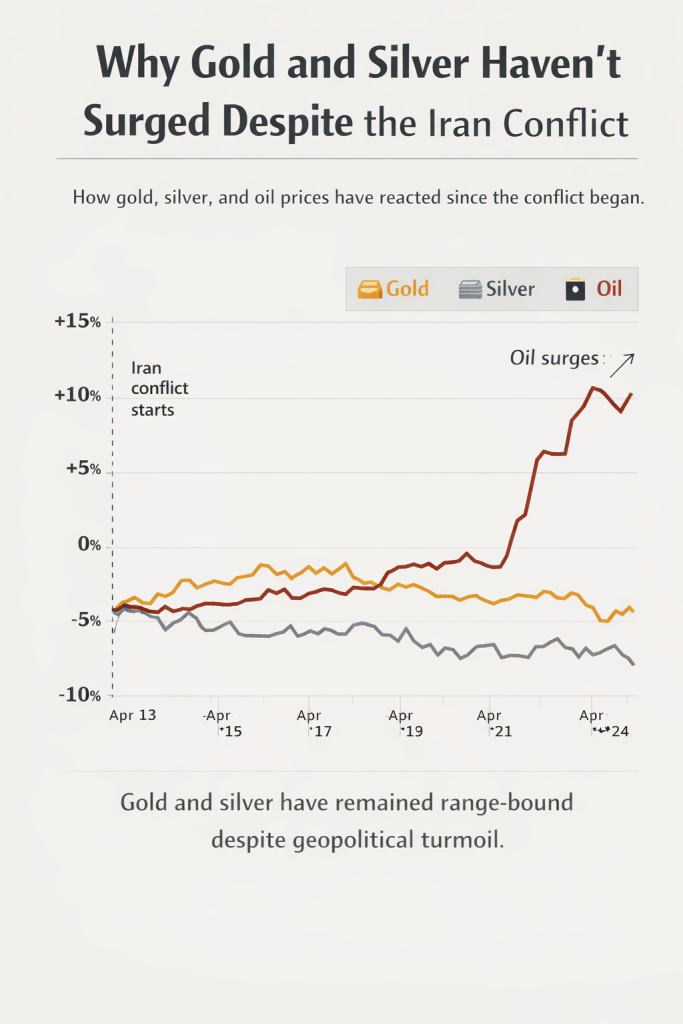
Geopolitical turmoil, such as the recent escalation in the Iran war, often drives investors toward traditional safe-haven assets like gold and silver. Yet, despite attacks on ships in the Strait of Hormuz and rising oil prices, precious metals haven’t seen the dramatic spike many expected. Understanding why requires a closer look at both market psychology and broader economic factors.
📉 The Safe-Haven Puzzle
Gold and silver typically gain when investors seek protection from:
- Geopolitical risk
- Currency devaluation
- Inflation concerns
However, the current market is showing a muted reaction. Prices for gold and silver remain largely range-bound, even as energy markets and equities react to the Middle East conflict.
🔹 Key Factors Suppressing Precious Metals
- Strong U.S. Dollar
Despite the war, the U.S. dollar has strengthened. A stronger dollar makes gold and silver more expensive for holders of other currencies, reducing demand. - Inflation vs. Interest Rates
Inflation is rising due to energy costs, but central banks are still maintaining relatively high interest rates. Higher rates increase the opportunity cost of holding non-yielding assets like gold and silver. - Risk Appetite in Other Assets
Some investors are rotating into energy stocks or commodities that may benefit directly from higher oil prices rather than into metals. This has diverted capital away from gold and silver. - Short-Term Market Sentiment
Precious metals often react to immediate, tangible shocks—like a sudden currency crisis or global financial panic. While the Iran conflict is serious, markets have priced in a gradual escalation, and interventions such as the IEA oil reserve release may reduce panic-driven buying.
🔹 Metals Outlook
Analysts suggest that if geopolitical tensions escalate further, or if energy-driven inflation pressures persist, gold and silver could still see a delayed surge. For now, though:
- Prices remain range-bound
- Safe-haven buying is tempered by strong dollar and higher rates
- Market participants are weighing oil market profits versus traditional hedges
📊 Bottom Line
Gold and silver are not always the immediate beneficiaries of geopolitical turmoil. Current economic conditions—strong dollar, elevated interest rates, and alternative avenues for hedging—are suppressing the metals’ typical reaction to risk.
Investors looking for safe havens may need to wait for further escalation or clear signs of economic stress before metals see a meaningful rally.
 Evergreen Financial News