The latest U.S. housing report delivered a modest surprise to the upside, giving investors a glimpse of stabilization in a market that has struggled under the weight of high mortgage rates and affordability challenges.
According to new data, existing home sales rose 1.7% in February to a seasonally adjusted annual rate of 4.09 million, beating expectations after a weak start to the year. (AP News)
While that increase suggests some resilience in housing demand, the bigger picture remains mixed.
What the Housing Report Shows
Several key takeaways emerged from the report:
1. Sales rebounded modestly
February sales improved from January levels, suggesting that buyers are slowly returning to the market as mortgage rates ease slightly.
2. Inventory is increasing
Available homes rose to about 1.29 million units, representing roughly 3.8 months of supply. (Trading Economics)
This is still historically tight, but it’s a step toward a more balanced market.
3. Home prices remain elevated
The median home price reached about $398,000, a record high for February. (AP News)
Even as price growth slows, affordability remains the central challenge for buyers.
4. Demand is still below normal levels
Despite the improvement, annual sales remain far below the roughly 5.2 million pace considered normal for the U.S. housing market. (AP News)
In other words: housing activity is stabilizing, not booming.
Why the Market Reacted the Way It Did
From a macro perspective, the report reinforces a theme investors have been watching closely:
The housing market is trying to bottom — but interest rates still control the story.
Lower mortgage rates earlier this year helped pull some buyers back into the market. But geopolitical risks and inflation concerns have recently pushed yields higher again, threatening that fragile improvement. (AP News)
For equity markets, housing data matters because it acts as a leading indicator for economic activity:
- Home purchases drive spending on furniture, appliances, renovations, and construction.
- Weak housing demand can signal tightening financial conditions.
- Strong housing activity tends to support consumer confidence.
Because of this, housing reports often influence Treasury yields, homebuilder stocks, and broader market sentiment.
The Bigger Trend: A Slow Housing Reset
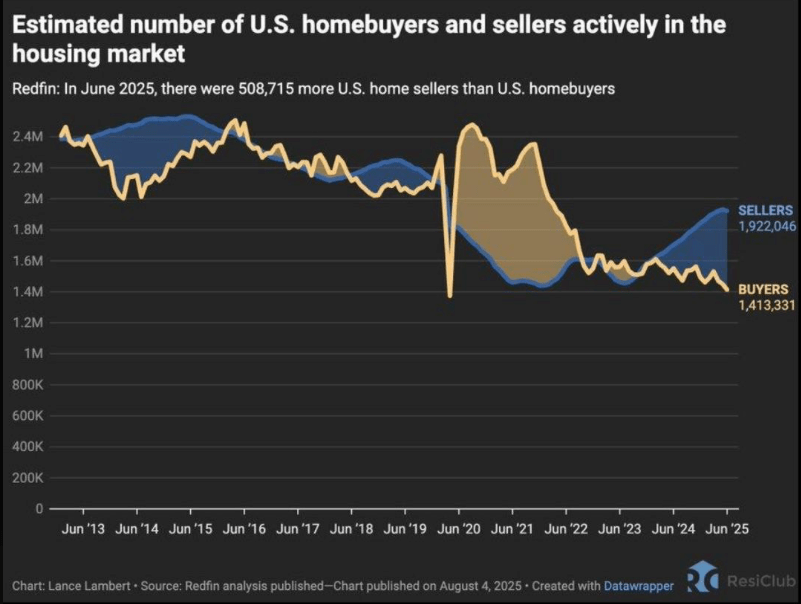
Beyond the monthly fluctuations, the broader housing trend suggests the market may be entering a period of slow normalization.
Several structural forces are shaping the outlook:
Supply shortages
The U.S. still faces a housing deficit of several million homes due to years of underbuilding.
Affordability pressure
Even though wage growth has improved affordability slightly, home prices remain historically high relative to income.
Slower price growth
Home price appreciation has already cooled significantly, with national growth slowing to roughly 0.7% year-over-year in early 2026. (Cotality)
That slowdown suggests the market is shifting from the pandemic housing boom toward a more balanced environment.
Market Forecast: What Comes Next
Looking ahead, several scenarios could shape the housing market over the next few months.
1. If mortgage rates fall
Housing activity could accelerate quickly. Demand remains strong beneath the surface, especially among first-time buyers waiting for affordability to improve.
2. If rates stay elevated
Expect continued sideways housing activity — modest sales, stable prices, and slow inventory growth.
3. If the economy weakens
Housing could soften again, particularly in overheated markets where prices surged during the pandemic.
Bottom Line
The latest housing report doesn’t signal a boom — but it does suggest the market is stabilizing after several difficult years.
Sales are slowly improving, inventory is rising, and price growth is cooling. Those are all signs of a housing market transitioning away from the extremes of the pandemic era.
For investors and traders, the key variable remains interest rates.
As long as borrowing costs remain high, housing will likely continue its slow grind toward equilibrium rather than a sharp recovery.
 Evergreen Financial News